








Understanding the Insurance Claim Process
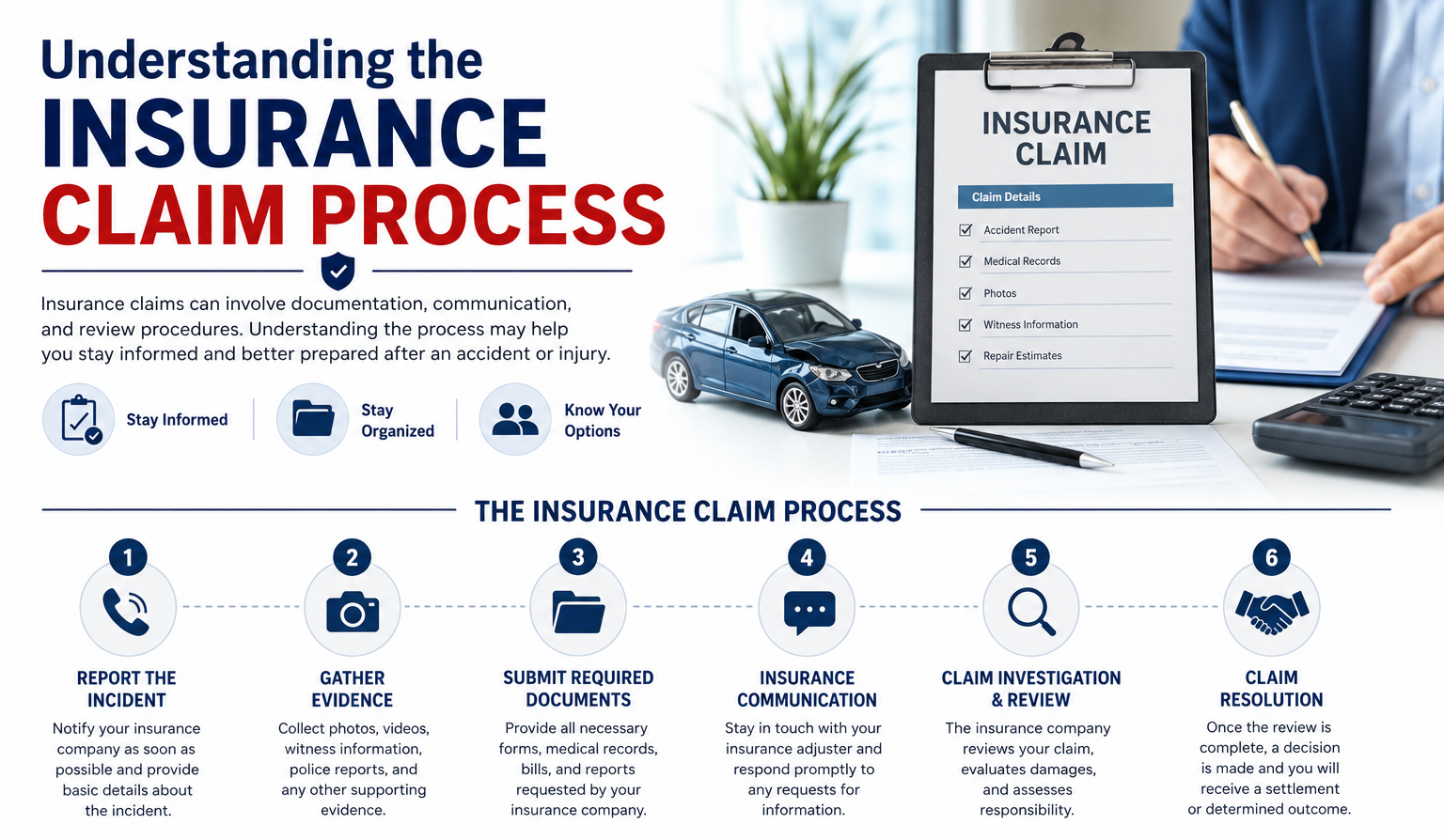
Insurance claims can involve documentation, communication, and review procedures. Understanding the process may help you stay informed and better prepared after an accident or injury.
Understanding the Insurance Claim Process
Insurance Claim Process
After an accident or injury, insurance companies may review information related to damages, medical treatment, and responsibility. The insurance claim process can vary depending on the situation, policy details, and available evidence.
Learning how the process generally works may help reduce confusion and improve organization throughout the claim.
Step-by-Step Insurance Claim Process
Report the Incident
The first step is usually notifying the insurance company about the accident or injury.
Important Information May Include
• Date and location of the incident
• Description of what happened
• Contact information
• Initial documentation
Prompt reporting may help avoid delays.
Gather Supporting Evidence
Insurance companies may request documentation related to the incident.
Examples
• Photos and videos
• Medical records
• Repair estimates
• Witness information
Strong documentation may help clarify the situation.
Submit Required Documents
The claim process often involves submitting forms and supporting records.
Common Documents
• Medical bills
• Accident reports
• Insurance forms
• Communication records
Keeping copies may help you stay organized.
Insurance Communication
Insurance representatives may contact you to review information related to the claim.
Helpful Tips
• Keep records of communication
• Review documents carefully
• Respond accurately and promptly
Clear communication may help reduce misunderstandings.
Claim Investigation and Review
Some claims require additional review and evaluation.
This May Include
• Reviewing medical records
• Evaluating evidence
• Assessing damages
• Determining responsibility
The review timeline may vary depending on complexity.
Claim Resolution
After reviewing the information, the claim may move toward resolution.
Possible Outcomes
• Settlement discussions
• Additional investigation
• Continued negotiations
• Formal legal proceedings
Keeping copies may help you stay organized.
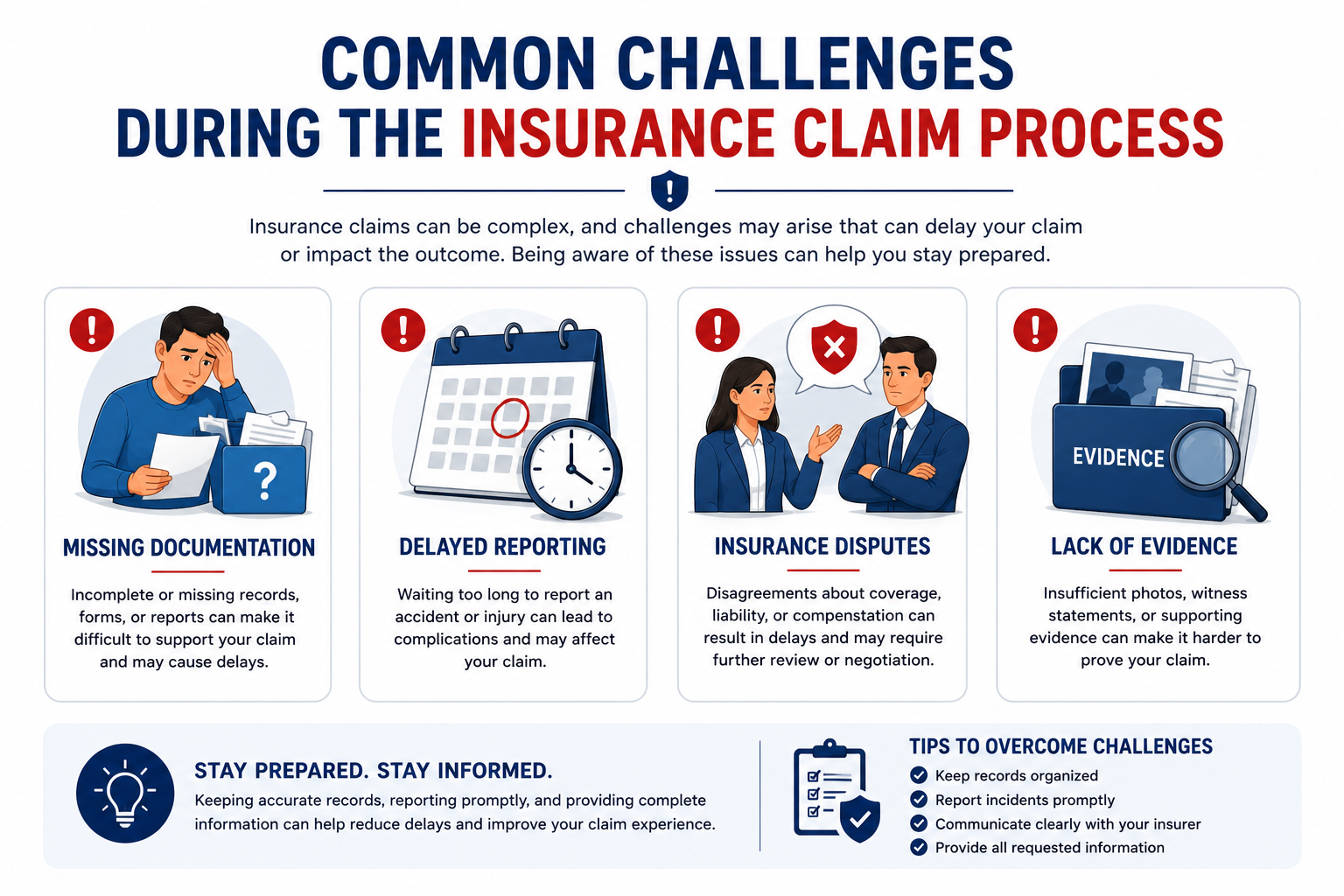
Common Challenges During the Insurance Claim Process
Some people may experience challenges such as:
- Missing documentation
- Delayed reporting
- Insurance disputes
- Lack of evidence
- Confusing procedures
Understanding these issues may help you stay better prepared.
Keep records organized
Medical Records
Documents related to injuries, treatment, and recovery.
Insurance Forms
Forms and paperwork required during the claim process.
Accident Reports
Official reports describing the details of the incident.
Repair Estimates
Cost estimates for vehicle or property damage repairs.
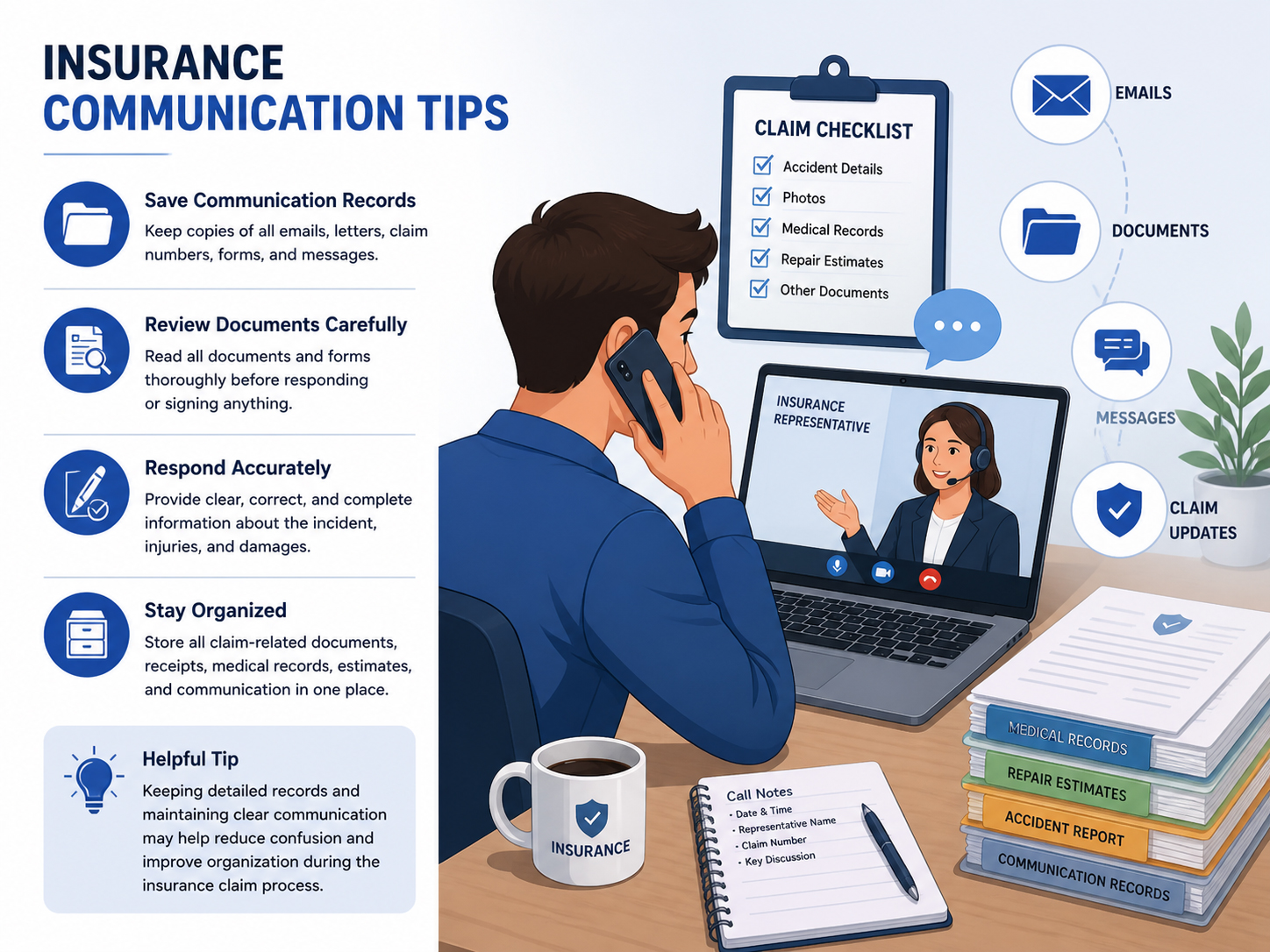
Insurance Communication Tips
Clear and organized communication with insurance companies can help reduce delays, avoid misunderstandings, and keep the claim process moving smoothly. Keeping accurate records and responding carefully may help you stay better prepared throughout the process.

Save Communication Records
Keep copies of all emails, letters, claim numbers, forms, and messages related to the claim. Maintaining organized records may help you track conversations and important updates throughout the process.

Respond Accurately
Provide clear and accurate information when communicating about the incident, injuries, or damages. Incorrect or incomplete details may create unnecessary complications later.

Respond Promptly When Needed
Insurance companies may request additional documents or information during the review process. Responding within reasonable timeframes may help avoid delays.

Review Documents Carefully
Take time to read documents, forms, and settlement-related paperwork before responding or signing anything. Reviewing information carefully may help prevent confusion or missing details.

Stay Organized
Store all claim-related information in one place, including medical records, repair estimates, insurance forms, receipts, and communication history. Organization may help make the process easier to manage.

Keep Supporting Evidence Available
Photos, videos, witness information, and accident reports may help support communication related to the claim and clarify important details.

Possible Outcomes of a Claim
Claim outcomes may differ based on the situation
Settlement discussions
Additional investigation
Ongoing negotiations
Formal legal proceedings
Investigation & Review
Reviewing Medical Records
Medical records may help document injuries, treatment, recovery progress, and other details related to the incident.
Evaluating Evidence
Photos, videos, reports, and witness information may help provide a clearer understanding of what happened.
Assessing Responsibility
The situation may be reviewed to determine who may have contributed to the accident, damages, or injuries.
Evaluating Damages
Medical costs, lost income, property damage, and other losses may be reviewed during the claim process.
Why Understanding the Insurance Claim Process Matters
Insurance claims may involve detailed procedures, documentation, and communication. Learning the process can help reduce stress and improve organization after an accident or injury.
FAQs
Medical records, photos, reports, estimates, and communication records may all be helpful.
The timeline varies depending on the complexity of the claim and available information.
Some claims may involve negotiations or additional review.
Documentation may help clarify damages, injuries, and the details of the incident.
Understand Your Options and Take the Next Step
Learning about the insurance claim process may help you stay informed and better prepared throughout your claim.