

Understanding State Laws Related to Personal Injury
Personal injury laws may vary from state to state across the United States. Understanding state-specific rules, timelines, and legal procedures may help people better understand how accident and injury claims are generally handled.
Understanding State Laws Related to Personal Injury
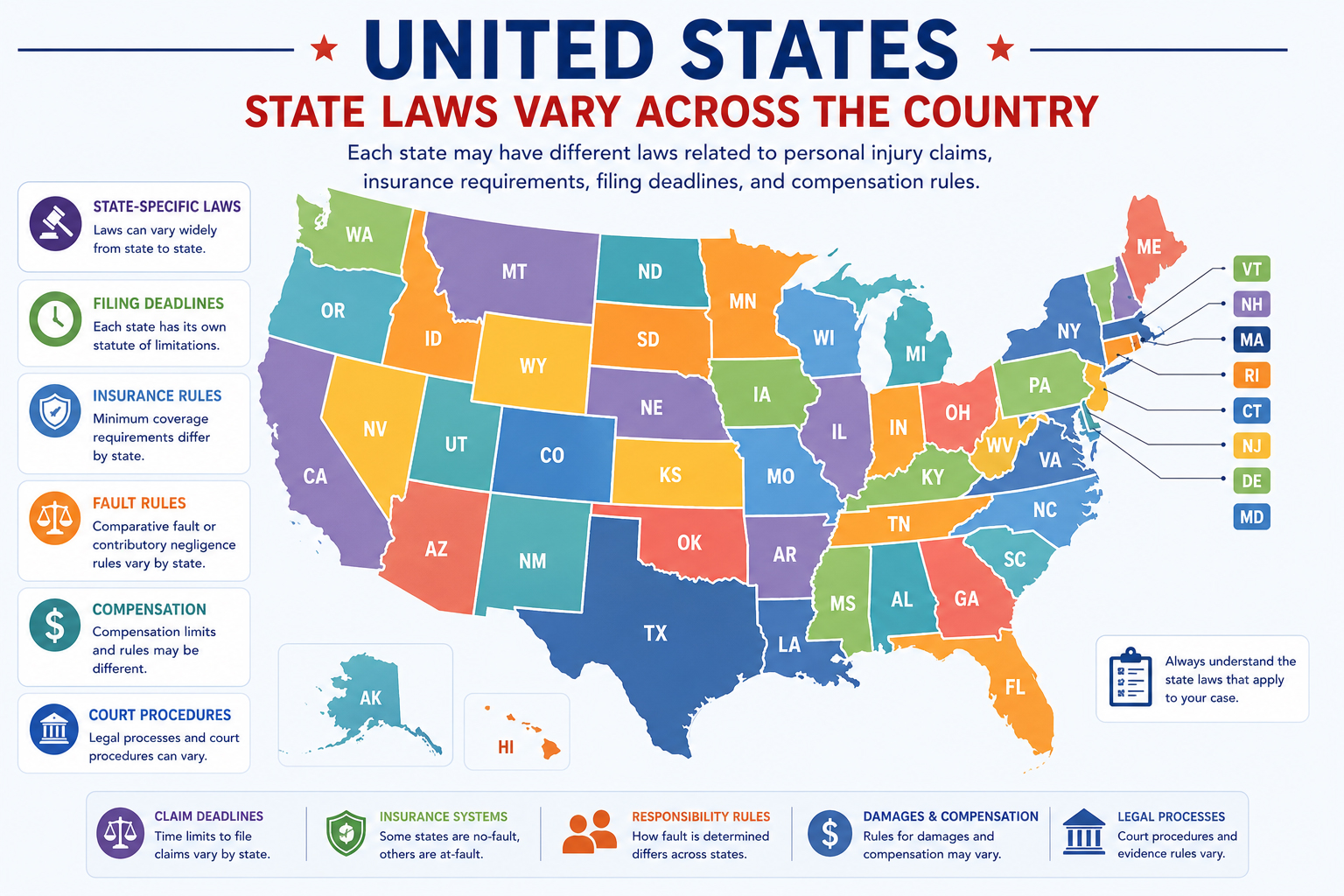
Each U.S. state may have different laws related to accidents, injury claims, insurance requirements, filing deadlines, and compensation rules. State laws can affect how claims are handled, how long people may have to file claims, and what factors may influence compensation-related discussions.
Learning about state laws may help people stay informed about legal procedures and recovery-related considerations after an accident or injury.
Why State Laws Matter
State-specific laws may influence:
- Filing deadlines for claims
- Insurance requirements
- Responsibility and fault rules
- Compensation-related procedures
- Court and legal processes
Because laws vary by state, recovery-related experiences may differ depending on where an accident occurred.
Common Areas Covered by State Laws
Filing Deadlines
(Statute of Limitations)
States may have different deadlines for filing injury-related claims or lawsuits..
This May Include
• Personal injury claim deadlines
• Wrongful death filing timelines
• Property damage claim deadlines
• Special rules for government-related claims
Missing deadlines may affect legal options in some situations.
Fault and Responsibility Rules
States may use different systems for determining responsibility after an accident..
Common Systems May Include
• Comparative fault rules
• Shared responsibility systems
• Contributory negligence rules
• Insurance-related fault procedures
Responsibility-related laws may affect compensation discussions.
Insurance Requirements
Insurance laws and minimum coverage requirements may vary by state.
Insurance Rules May Include
• Minimum auto insurance requirements
• No-fault insurance systems
• Liability coverage rules
• Uninsured motorist requirements
Insurance procedures may differ depending on state laws.
Compensation Rules
Some states may have different guidelines related to compensation and damages.
This May Include
• Medical expense-related rules
• Pain and suffering considerations
• Property damage procedures
• Compensation limitations in certain cases
Compensation-related rules may vary depending on the situation and state law.
Court and Legal Procedures
Court systems and legal procedures may also vary between states.
This May Include
• Filing procedures
• Evidence requirements
• Court timelines
• Settlement-related procedures
Legal processes may differ from one state to another.
Popular State Law Guides

California Personal Injury Laws
Topics may include
• Comparative fault rules
• Filing deadlines
• Insurance procedures
• Accident-related claim processes

Florida Personal Injury Laws
Topics may include
• No-fault insurance rules
• Injury claim procedures
• Property damage rules
• Filing deadlines

Texas Personal Injury Laws
Topics may include
• Shared responsibility rules
• Filing timelines
• Compensation considerations
• Insurance requirements

New York Personal Injury Laws
Topics may include
• Insurance-related procedures
• Comparative fault considerations
• Compensation-related processes
• Legal filing timelines
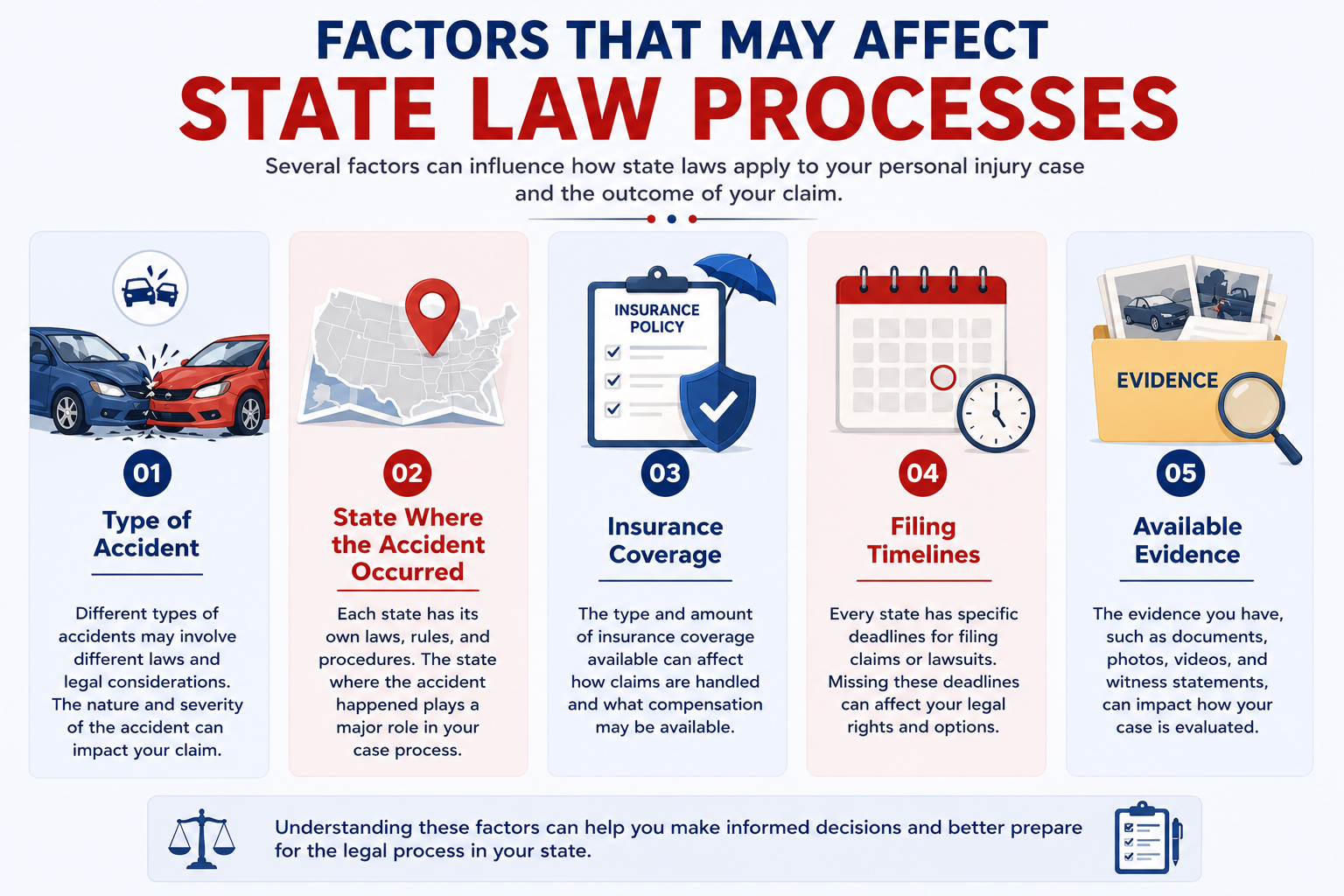
Factors That May Affect State Law Processes
Several factors may influence how laws apply to injury-related situations:
- Type of accident
- State where the accident occurred
- Insurance coverage
- Filing timelines
- Available evidence
Each situation may involve different legal considerations.
Important Documentation Related to State Law Claims
Keeping organized records may help support injury-related processes and communication.
Accident Reports
Accident reports may help document important details about how the incident occurred, including dates, locations, and other relevant information.
Medical Records
Medical records may help show injuries, treatment received, recovery progress, and ongoing healthcare needs related to the accident.
Insurance Communication
Insurance emails, letters, and claim-related communication may help keep important updates, requests, and claim information organized.
Photos and Videos
Photos and videos may help visually document accident scenes, injuries, property damage, and other important evidence.
Witness Information
Witness details may help provide additional information about the accident and support a clearer understanding of what occurred.
Expense Documentation
Expense records may help track medical bills, repair costs, transportation expenses, and other accident-related financial impacts.
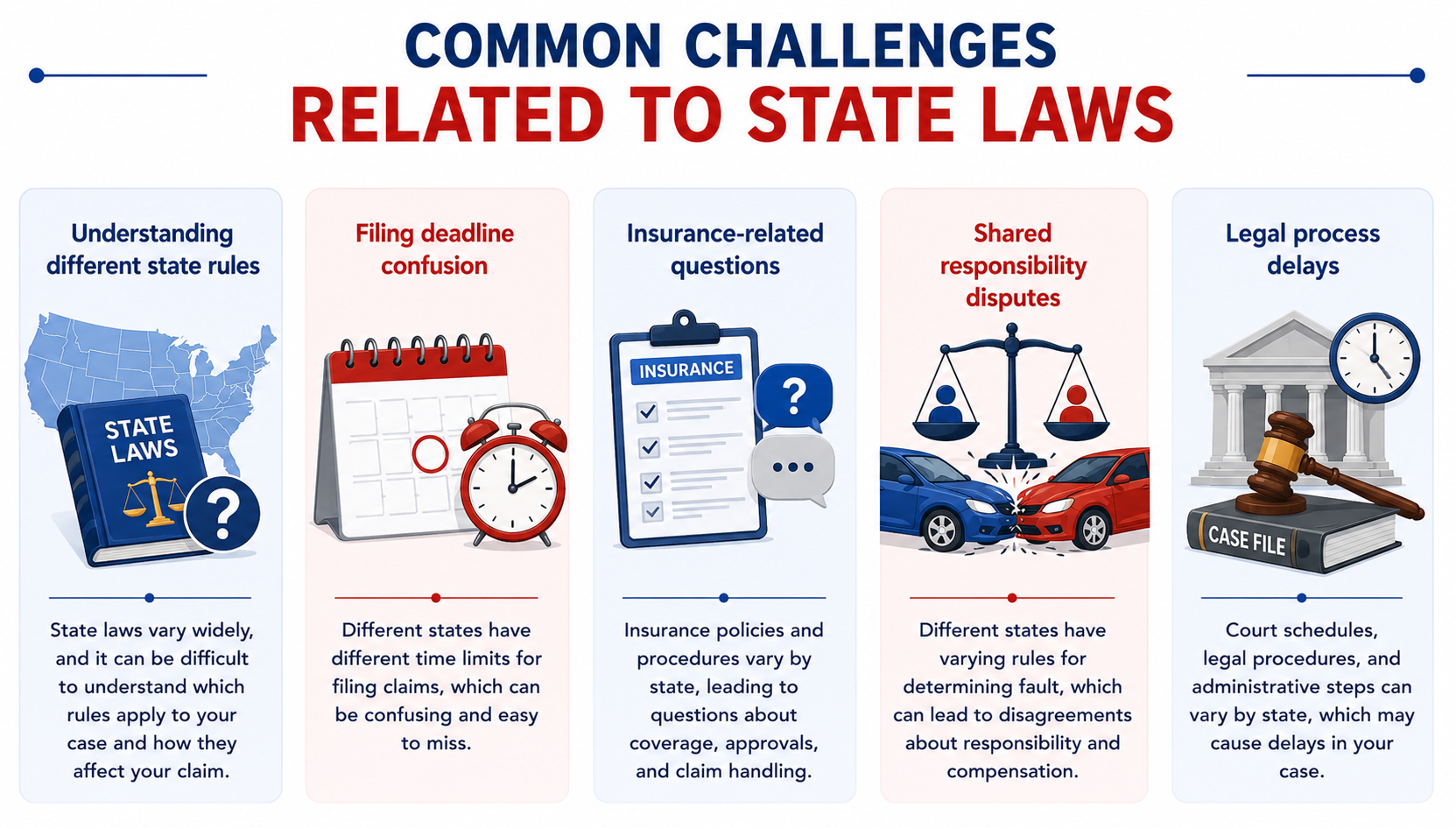
Common Challenges Related to State Laws
Some people may experience challenges such as:
- Understanding different state rules
- Filing deadline confusion
- Insurance-related questions
- Shared responsibility disputes
- Legal process delays
Learning about state laws may help reduce confusion and improve preparation.
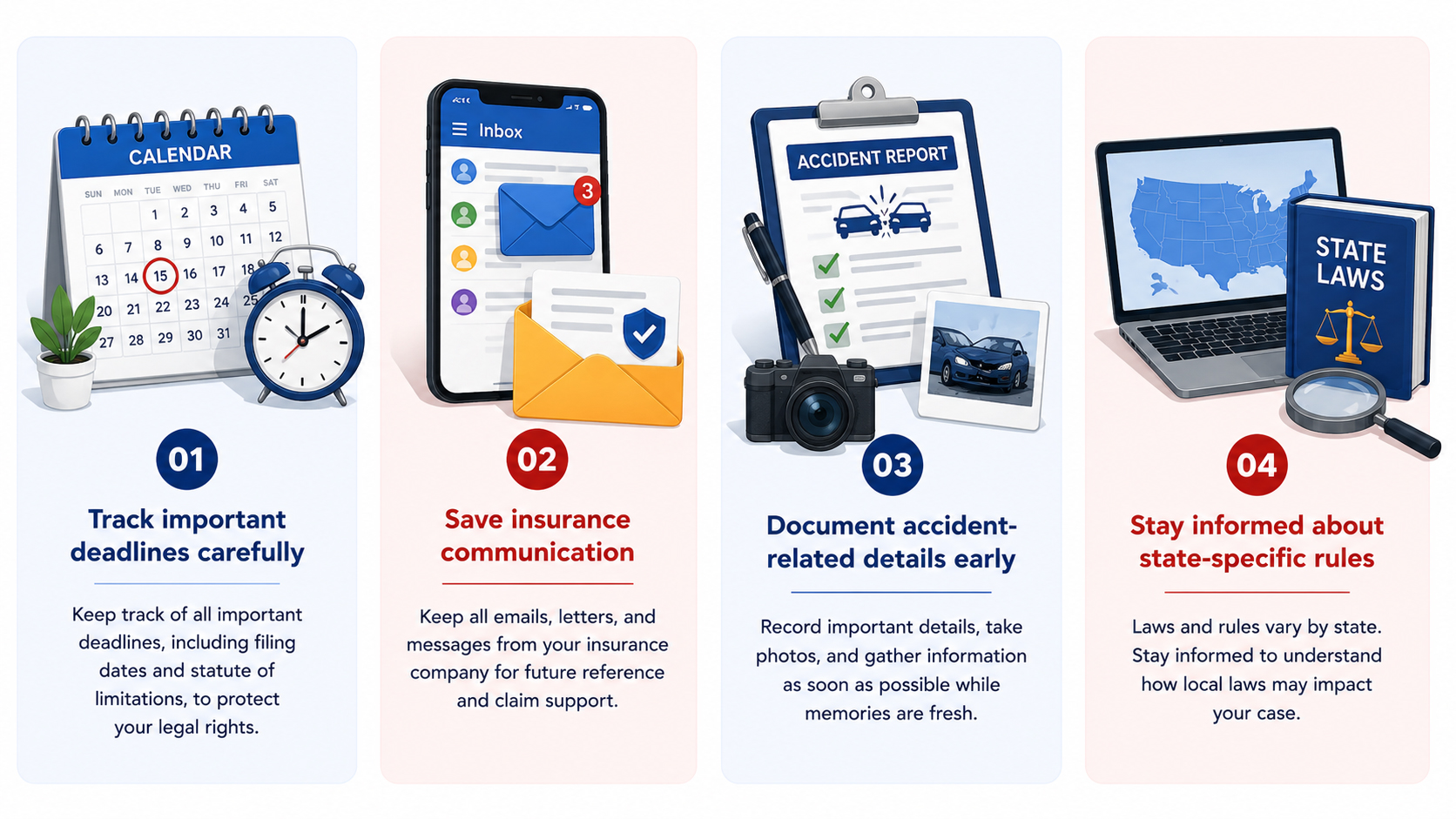
Tips to Stay Organized
Keep records and documents organized
- Track important deadlines carefully
- Save insurance communication
- Document accident-related details early
- Stay informed about state-specific rules
Why Understanding State Laws Matters
State laws may influence many parts of the injury recovery process, including filing deadlines, insurance procedures, and compensation-related discussions. Learning about state-specific rules may help people stay informed and better prepared after an accident or injury.
FAQs
Yes. Filing deadlines, insurance rules, and compensation-related procedures may differ across states.
Some states have specific time limits for filing injury-related claims or lawsuits.
Yes. Insurance systems, coverage requirements, and procedures may differ depending on state law.
Medical records, reports, photos, and insurance communication may help support recovery-related processes.
Explore State-Specific Injury Law Guides
Understanding state laws may help people better navigate injury-related processes, insurance procedures, and recovery-related challenges.