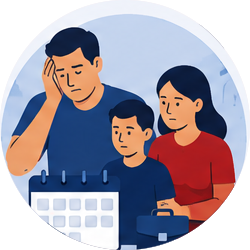
Some accidents and injuries may involve physical pain, emotional distress, mental challenges, and changes to daily life. Pain and suffering generally refer to the personal and emotional impacts experienced during recovery.
Understanding Pain and Suffering After an Injury
Injuries can sometimes affect more than physical health alone. Recovery may involve emotional stress, discomfort, reduced mobility, anxiety, or challenges that affect daily routines and overall quality of life.
Pain and suffering may vary greatly depending on the type of injury, recovery process, and long-term effects experienced after an accident.
Common Types of Pain and Suffering
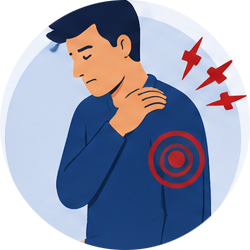
Physical Pain
Some injuries may cause temporary or long-term physical discomfort during recovery.
This May Include
• Ongoing pain
• Mobility limitations
• Physical discomfort
• Recovery-related complications
Physical recovery experiences may differ from person to person.
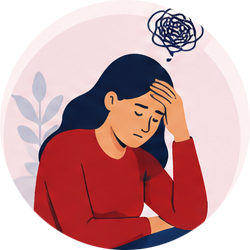
Emotional Distress
Accidents and injuries may also affect emotional well-being.
Emotional Challenges May Include
• Anxiety
• Stress
• Emotional trauma
• Fear related to recovery or daily activities
Emotional impacts may continue throughout the recovery process.
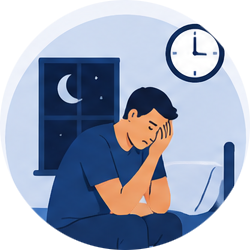
Mental and Lifestyle Challenges
Injuries may affect sleep, routines, hobbies, or other daily activities.
Lifestyle Impacts May Include
• Sleep difficulties
• Reduced activity levels
• Social limitations
• Loss of independence
Daily routines may change during recovery.
Long-Term Recovery Effects
Some injuries may require long-term treatment or ongoing rehabilitation.
Long-Term Effects May Include
• Chronic pain
• Ongoing therapy
• Extended recovery periods
• Long-term emotional stress
Recovery timelines vary depending on the injury.
Impact on Daily Life
Pain and suffering may sometimes affect work, relationships, and everyday responsibilities.
This May Include
• Difficulty completing tasks
• Reduced quality of life
• Work limitations
• Family or social challenges
Each recovery experience is unique.
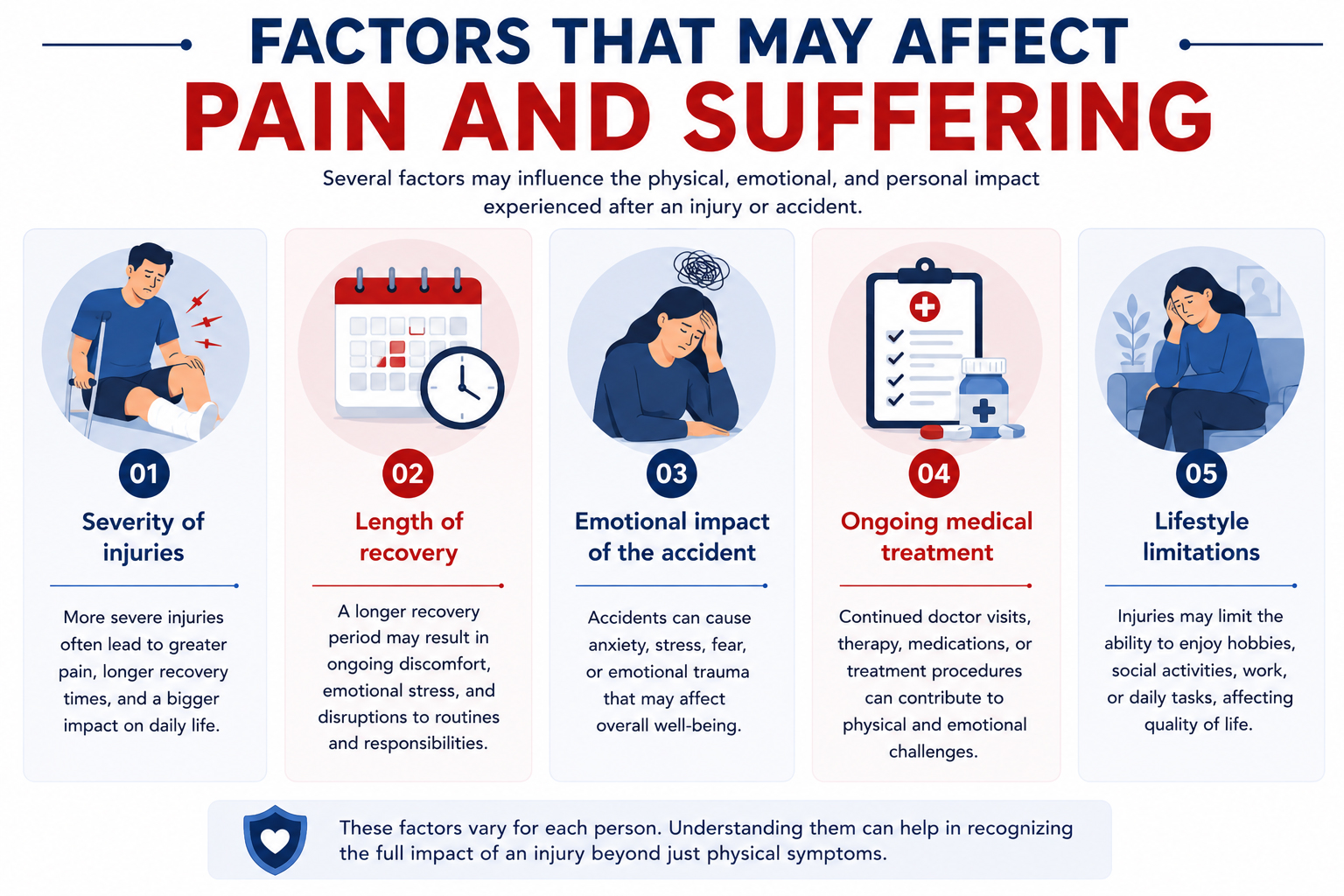
Factors That May Affect Pain and Suffering
Several factors may influence recovery-related personal impacts:
Severity of injuries
Length of recovery
Emotional impact of the accident
Ongoing medical treatment
Lifestyle limitations
The effects may differ depending on the situation.
Important Documentation Related to Pain and Suffering
Keeping organized records may help document recovery experiences and ongoing challenges.
Medical Records
Medical records may help document injuries, treatment history, recovery progress, and ongoing healthcare needs after an accident.
Therapy Notes
Therapy notes may help track emotional recovery, rehabilitation progress, or ongoing treatment sessions.
Recovery Journals
Recovery journals may help document daily pain levels, emotional challenges, recovery milestones, and lifestyle changes during healing.
Prescription Records
Prescription records may help show medication use, treatment plans, and ongoing healthcare-related expenses.
Work Absence Documentation
Work absence records may help track missed workdays, reduced schedules, or recovery-related limitations affecting employment.
Personal Notes About Daily Limitations
Personal notes may help document challenges related to mobility, sleep, household activities, work tasks, or everyday routines during recovery.
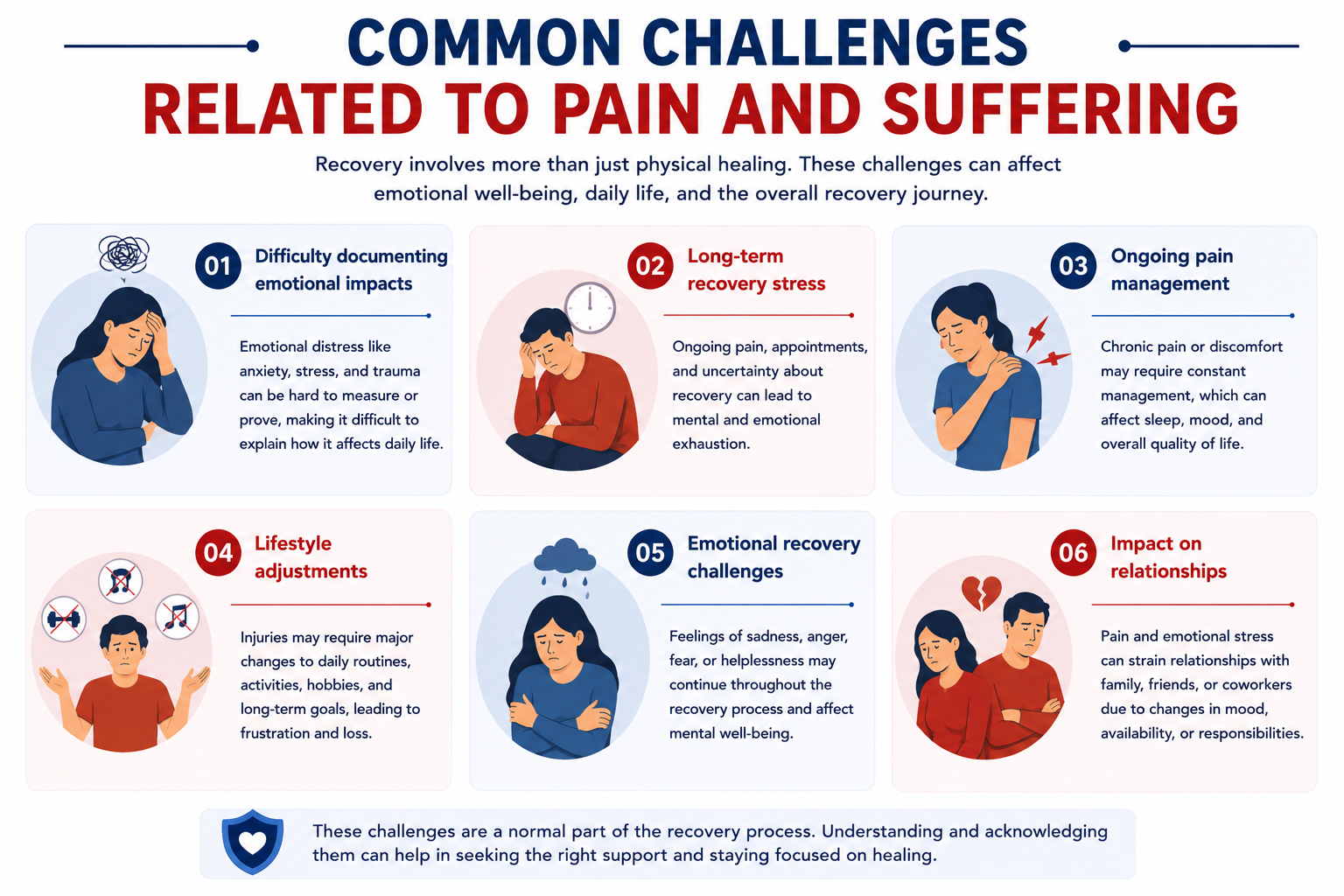
Common Challenges Related to Pain and Suffering
Some people may experience challenges such as:
Difficulty documenting emotional impacts
Long-term recovery stress
Ongoing pain management
Lifestyle adjustments
Emotional recovery challenges
Understanding these challenges may help reduce confusion during recovery.
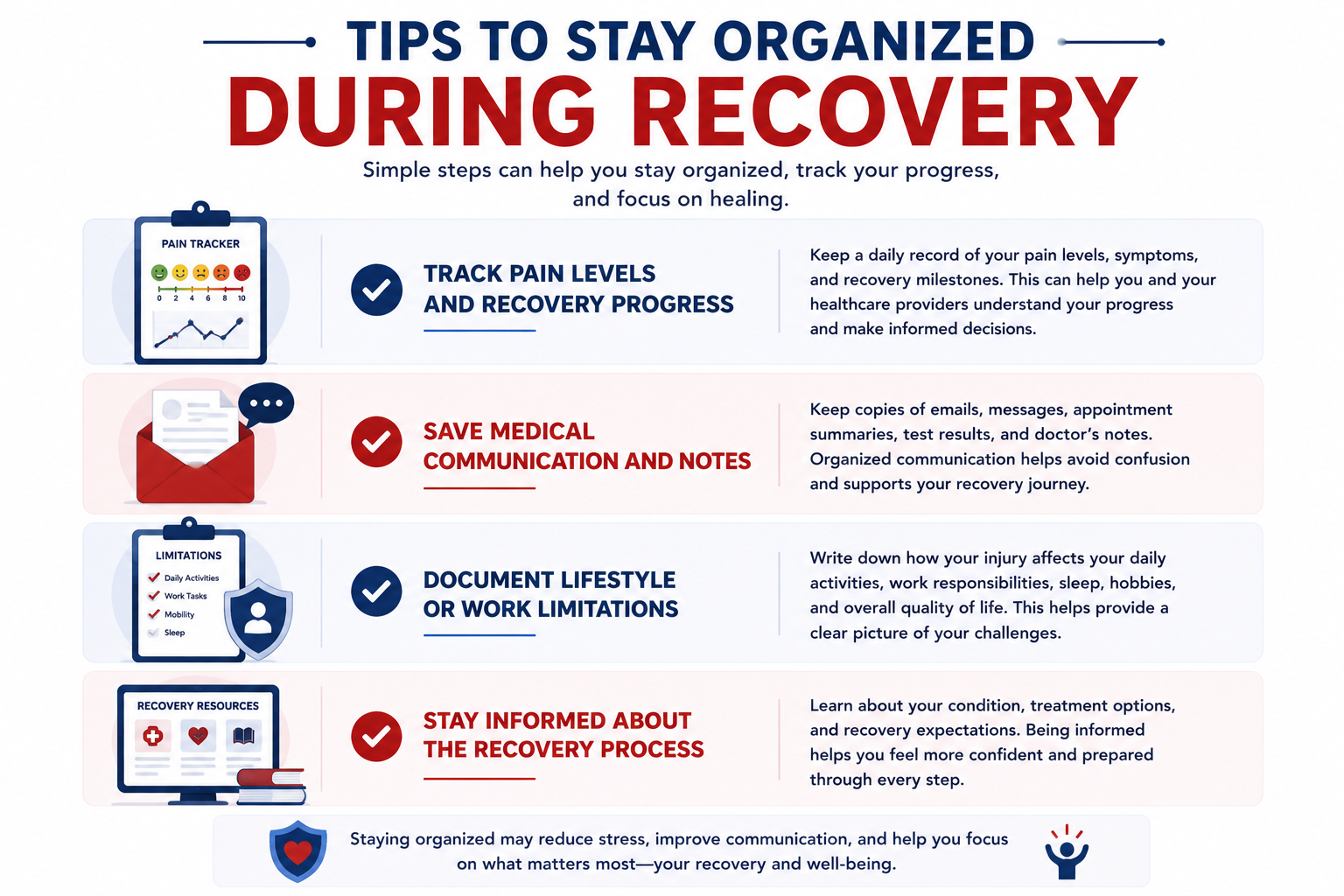
Tips to Stay Organized During Recovery
Keep treatment and therapy records organized
Track pain levels and recovery progress
Save medical communication and notes
Document lifestyle or work limitations
Stay informed about the recovery process
Why Understanding Pain and Suffering Matters
Physical recovery and emotional well-being can both play important roles after an injury. Learning about pain and suffering may help people better understand the personal effects of recovery and long-term challenges.