Some injury-related claims may involve additional legal steps when settlement discussions do not fully resolve the situation. Learning how the lawsuit process generally works may help reduce confusion and improve understanding.
Understanding the Lawsuit Process
Not every claim leads to a lawsuit. However, in some situations, disputes over responsibility, damages, or settlement discussions may require additional legal procedures.
The lawsuit process can involve documentation, investigations, court filings, negotiations, and formal legal proceedings. Every case is unique, and timelines may vary depending on complexity.
What Is a Lawsuit?
A lawsuit is a formal legal process used to resolve disputes through the court system when parties cannot reach an agreement.
Lawsuits May Involve:
Injury-related damages
Financial losses
Property damage
Liability disputes
Settlement disagreements
The process may differ depending on the type of case and local laws.
Common Steps in the Lawsuit Process
Case Review and Preparation
The first step often involves reviewing records, evidence, and other information related to the incident.
This May Include
• Medical records
• Accident reports
• Witness information
• Photos and videos
• Insurance communication
Organization may help simplify the process later.
Filing the Lawsuit
Court documents may be filed to officially begin the legal process.
Filing May Include
• Complaint documents
• Claim details
• Information about damages
• Legal notifications
The filing process varies depending on jurisdiction and case type.
Investigation and Discovery
Both sides may review evidence and exchange information during the discovery phase.
Discovery May Include
• Document requests
• Witness statements
• Medical evaluations
• Expert opinions
This stage may take time depending on complexity.
Negotiation and Settlement Discussions
Settlement discussions can continue during different stages of the lawsuit process.
Discussions May Focus On
• Medical expenses
• Financial losses
• Responsibility issues
• Supporting evidence
Some cases may resolve before trial.
Court Proceedings or Trial
If no agreement is reached, the case may move forward through additional court procedures or trial.
Court Proceedings May Include
• Presenting evidence
• Witness testimony
• Legal arguments
• Judicial review
The outcome depends on the specific details of the case.
Factors That May Affect a Lawsuit
Several factors may influence the lawsuit process
Severity of Injuries
The seriousness of injuries may affect medical needs, recovery time, and overall claim considerations.
Available Evidence
Photos, reports, witness information, and other evidence may help support the details of the case.
Liability Disputes
Disagreements about who may be responsible for the incident can affect the legal process and discussions.
Insurance Coverage
Insurance policy details and coverage limits may influence how claims and damages are handled.
Complexity of the Case
Cases involving multiple parties, serious injuries, or detailed investigations may require additional time and review.
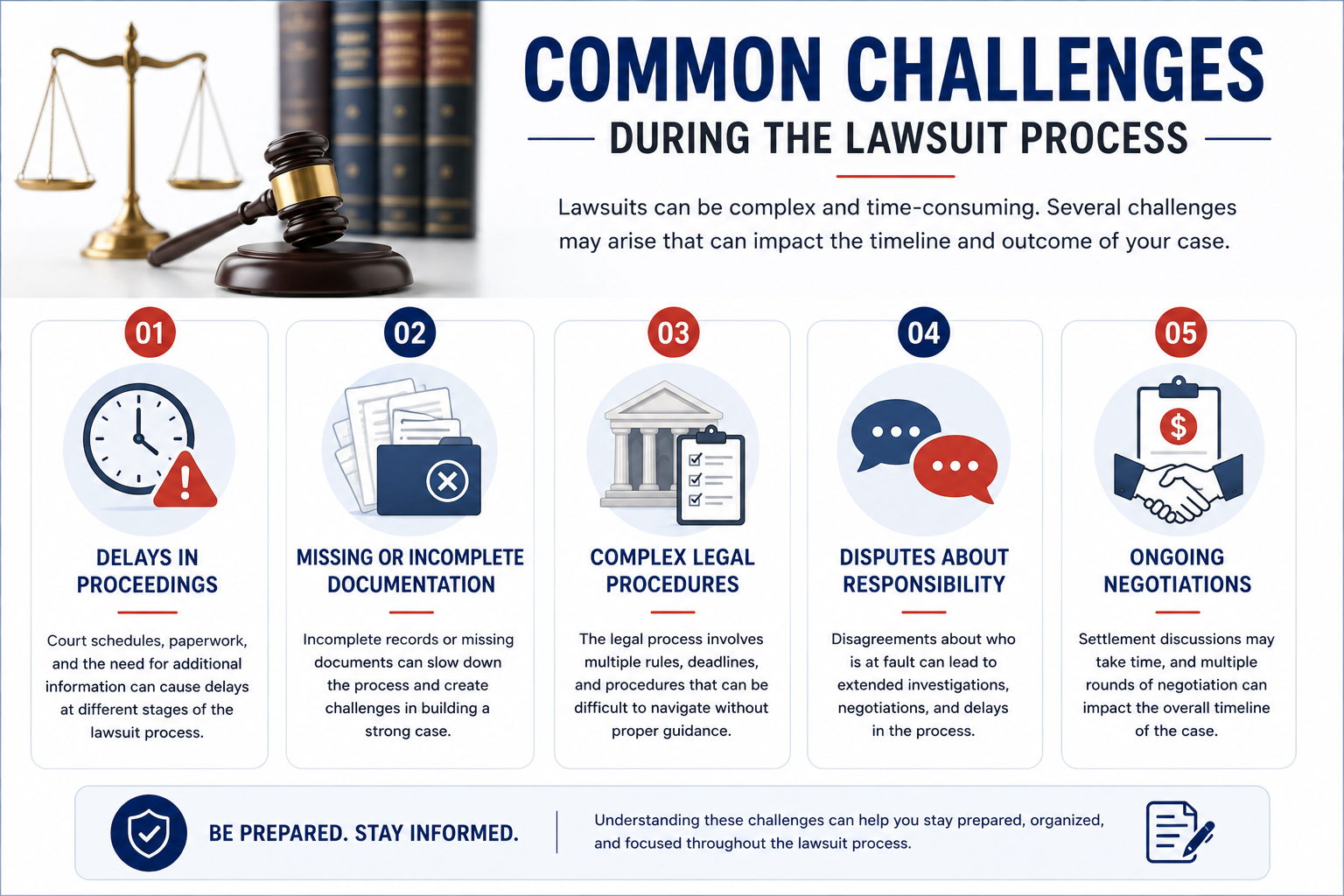
Common Challenges During the Lawsuit Process
Some people may experience challenges such as:
Delays in proceedings
Missing documentation
Complex legal procedures
Disputes about responsibility
Ongoing negotiations
Understanding these challenges may help you stay better prepared.
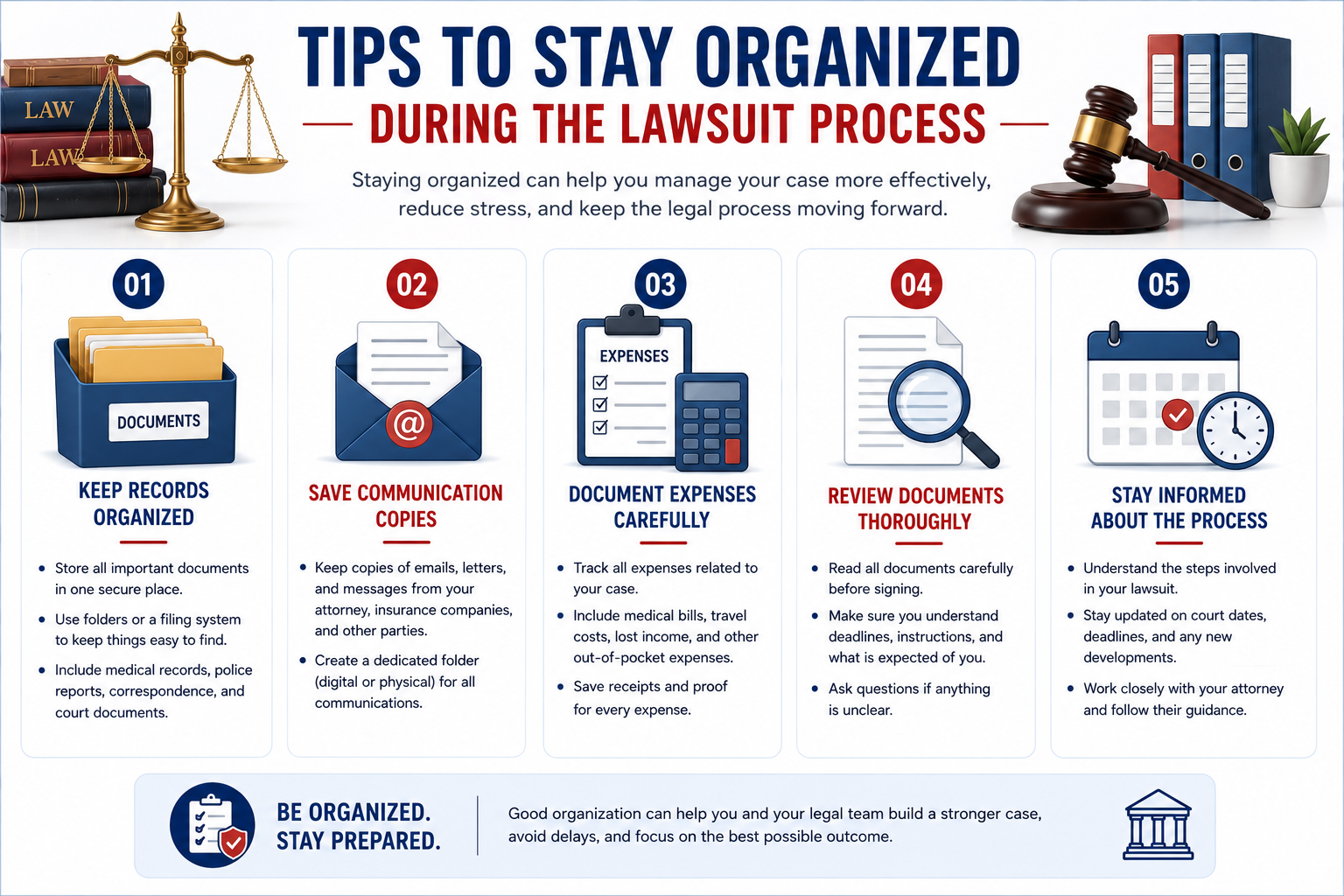
Tips to Stay Organized During the Process
Keep records organized:
Save copies of communication
Document expenses carefully
Review documents thoroughly
Stay informed about your options
Why Understanding the Lawsuit Process Matters
The lawsuit process may involve multiple stages, documents, and legal procedures. Learning how the process generally works may help reduce uncertainty and improve organization during complex situations.