




Filing an Injury Claim:
Understanding the Process
Filing an injury claim can feel overwhelming after an accident. Understanding the general process may help you stay informed and better prepared.
Understanding the Filing an Injury Claim
Steps After an Accident
After an accident or injury, many people are unsure how the claim process works or what information may be needed. Filing an injury claim often involves documentation, medical records, insurance communication, and understanding your legal options.
While every situation is different, learning the general process can help reduce confusion and improve organization.
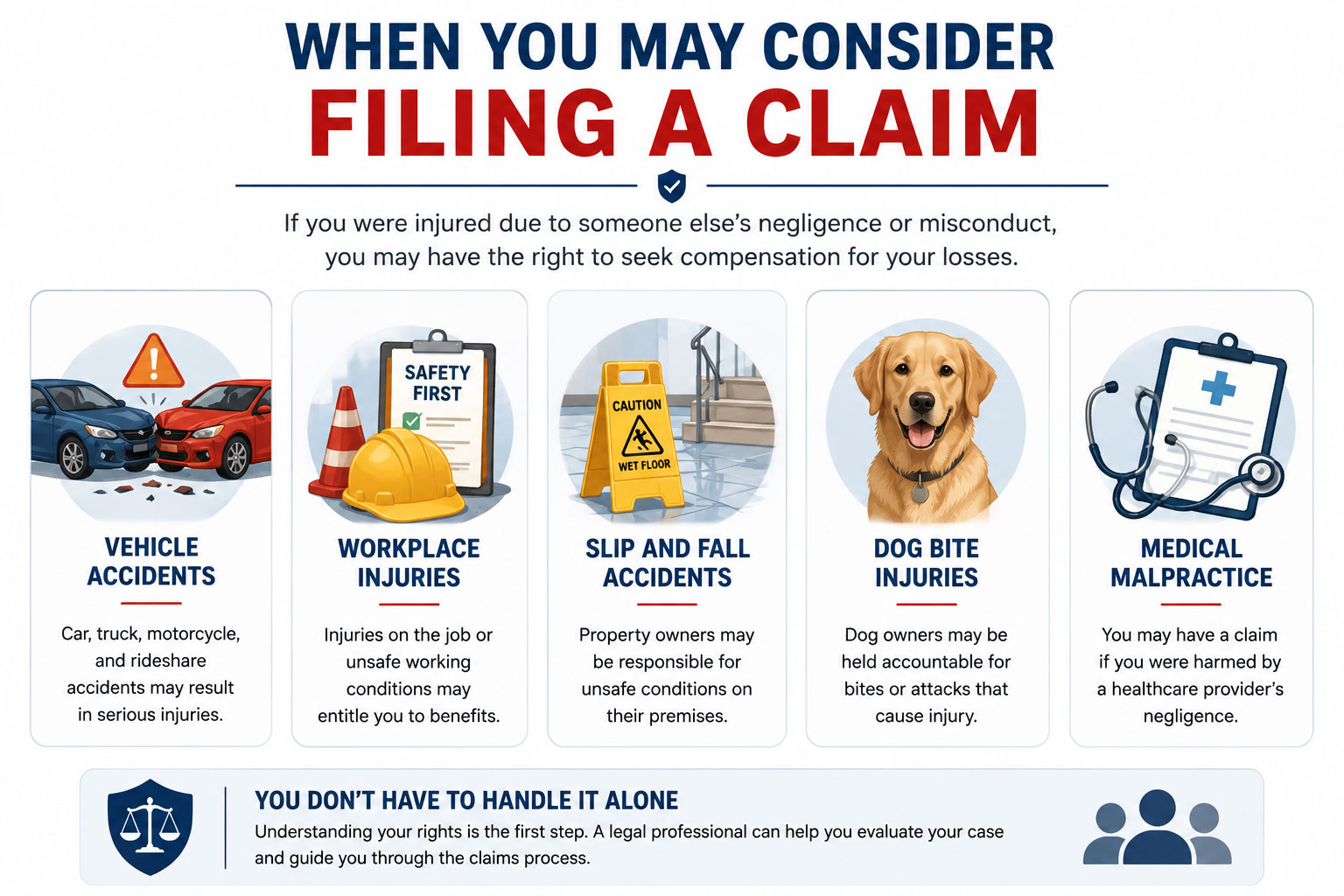
When You May Consider Filing a Claim
People may consider filing a claim after situations such as:
- Vehicle accidents
- Workplace injuries
- Slip and fall accidents
- Dog bite injuries
- Medical malpractice incidents
The type of claim may depend on the specific circumstances involved.
Important Steps Before Filing a Claim
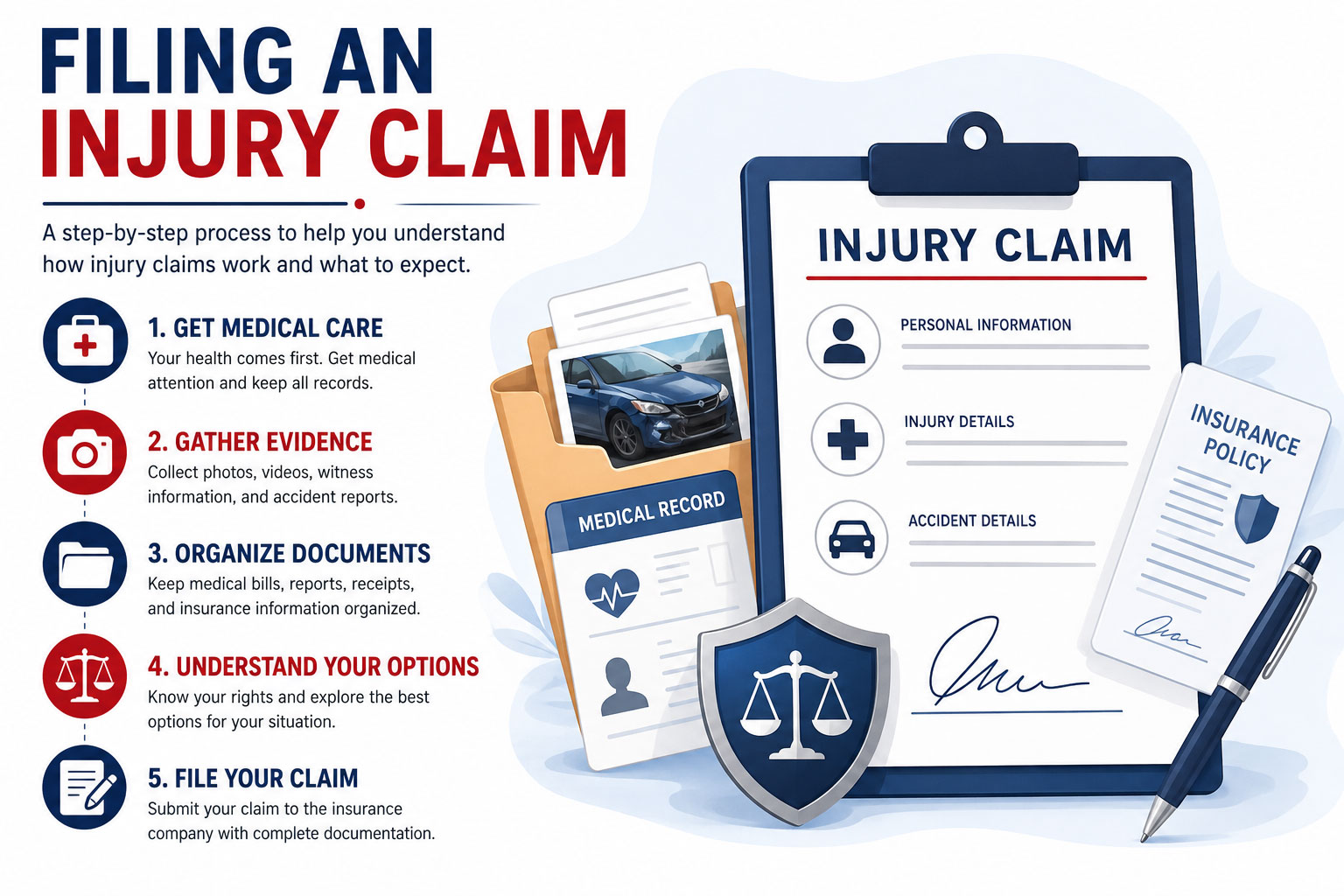
Seek Medical Attention
Your health should always come first. Medical records may also help document injuries related to the incident.
Gather Evidence
Collect information related to the accident or injury.
Examples
• Photos and videos
• Medical records
• Witness information
• Accident reports
Organize Your Documents
Keeping records organized may help simplify the process.
Helpful Documents
• Medical bills
• Insurance communication
• Repair estimates
• Receipts and reports
Understand Your Options
Different claims may involve different procedures, timelines, and requirements. Understanding the process may help you make informed decisions.
Filing the Claim Process
The filing process may involve
Submit Documentation
Accurate documentation such as medical records, reports, and receipts may help support the claim process and provide important details about the incident.
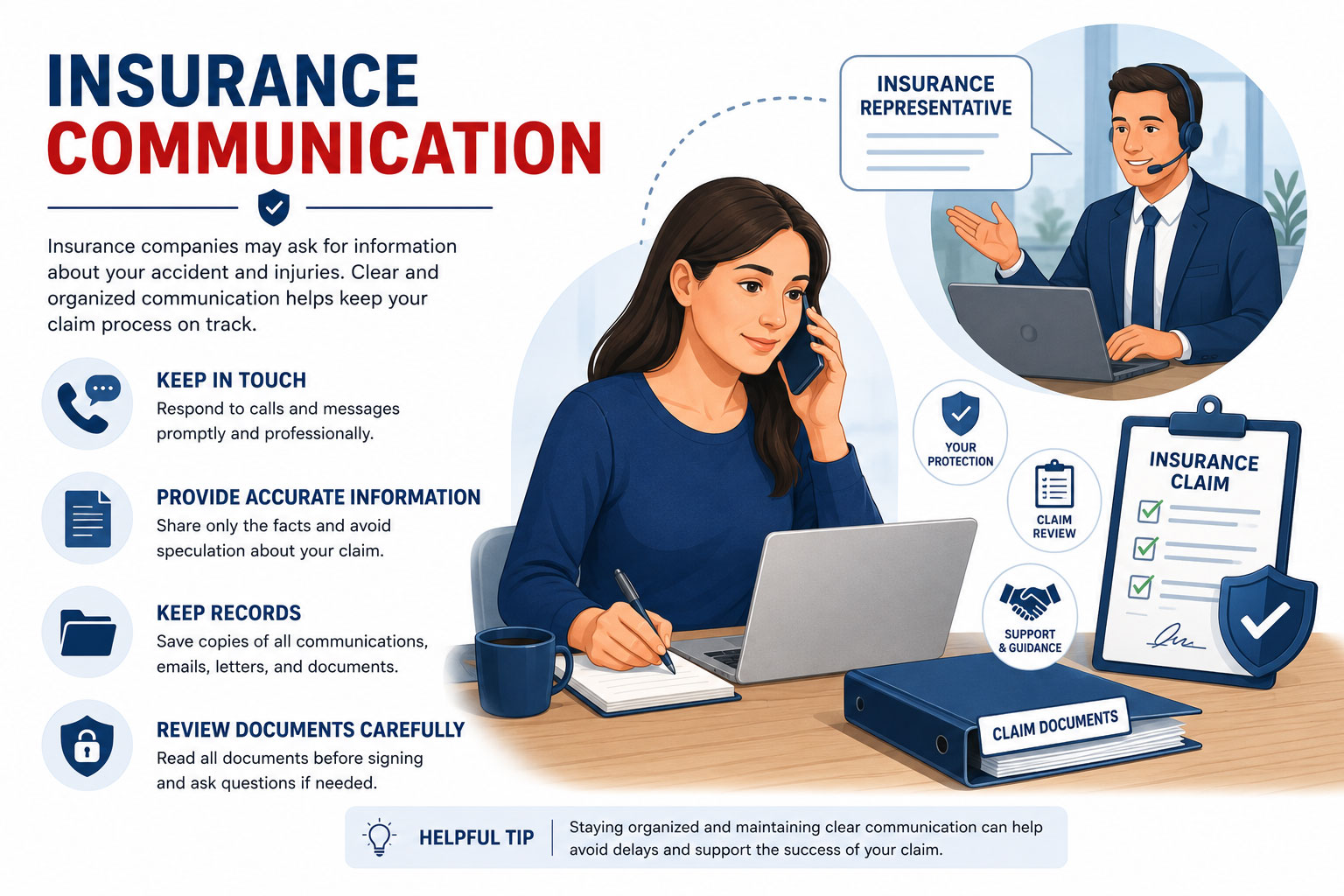
Insurance Communication
Insurance companies may request statements, records, and additional information related to the accident or injuries during the review process.
Supporting Evidence
Photos, videos, witness details, and other evidence can help create a clearer understanding of what happened.
Required Forms
Some claims may involve completing forms and providing information required by insurance providers or other parties involved.
Insurance Communication
Insurance companies may request information related to the incident and injuries.
Helpful Tips:
- Keep copies of communication
- Review documents carefully
- Stay organized throughout the process
Â
Investigation and Review
Some claims may require further evaluation.
This May Include:
- Reviewing medical records
- Assessing evidence
- Investigating responsibility
- Evaluating damages
The timeline may vary depending on complexity.

Reviewing Medical Records
Medical records may help document injuries, treatment, and recovery related to the incident.

Evaluating Damages
Medical costs, lost income, property damage, and other impacts may be reviewed to better understand the overall losses related to the incident.

Evaluating Evidence
Photos, reports, and witness information can help provide a clearer understanding of what happened.

Assessing Responsibility
The situation may be reviewed to determine who may have contributed to the accident or injuries.

Possible Outcomes of a Claim
Claim outcomes may differ based on the situation
Settlement discussions
Additional investigation
Ongoing negotiations
Formal legal proceedings
Common Challenges When Filing a Claim
Some common issues include
Missing Documentation
Incomplete or missing records can make the claim process more difficult.
Delayed Reporting
Waiting too long to report an incident may create unnecessary complications.
Insurance Disputes
Disagreements about coverage or compensation may delay the process.
Lack of Evidence
Limited evidence or witness information can make claims harder to support.
Tips to Help Strengthen Your Claim
Seek Medical Attention
Getting medical care quickly helps protect your health and creates important documentation related to your injuries.
Gather Evidence
Photos, videos, reports, and witness information can help clearly document what happened.
Organize Documents
Keeping records, bills, reports, and communication organized may help simplify the claim process.
Understand Your Options
Learning about possible next steps can help you make informed decisions about your situation.
Why Understanding the Filing Process Matters
Learning how injury claims work can help reduce stress and confusion after an accident. Staying informed may help you better understand what to expect throughout the process.
FAQs
Medical records, reports, photos, receipts, and communication records may all be helpful.
No. Some claims may be resolved through settlement discussions.
The timeline varies depending on the complexity of the claim.
In some situations, partial responsibility may still allow certain options.
Understand Your Options and Take the Next Step
Learning about the filing process can help you stay informed and better prepared after an injury.