Some injuries may affect a person’s ability to work temporarily or long term. Lost wages generally refer to income that may be impacted because of recovery, treatment, or time away from work after an accident or injury.
Understanding Lost Wages After an Injury
After an accident or injury, some people may miss workdays, reduce working hours, or experience limitations that affect earning ability. Lost wages can include short-term income loss as well as potential long-term financial impacts depending on the situation.
Understanding common types of wage-related losses may help people better understand the financial effects of an injury-related situation.
Common Types of Lost Wages
Missed Workdays
Recovery from injuries may require time away from work for treatment, rest, or medical appointments.
This May Include
• Sick leave
• Recovery time
• Hospital visits
• Follow-up appointments
Missing workdays may result in temporary income loss.
Reduced Working Hours
Some injuries may limit the ability to work full schedules or regular shifts.
Reduced Hours May Include
• Shortened workdays
• Limited schedules
• Modified duties
• Temporary restrictions
Reduced working hours may affect overall earnings.
Recovery-Related Absences
Ongoing treatment or rehabilitation may require additional time away from work.
Examples
• Physical therapy sessions
• Rehabilitation programs
• Medical evaluations
• Follow-up care
Recovery-related absences may continue throughout treatment.
Loss of Future Earning Ability
Serious injuries may affect future work opportunities or long-term earning potential.
Future Income Impacts May Include
• Reduced physical ability
• Career limitations
• Long-term work restrictions
• Changes in employment opportunities
Every situation may involve different long-term effects.
Self-Employment Income Loss
Self-employed individuals may also experience income interruptions after an injury.
This May Include
• Missed business opportunities
• Reduced client work
• Delayed projects
• Loss of productivity
Income impacts may vary depending on the type of work performed.
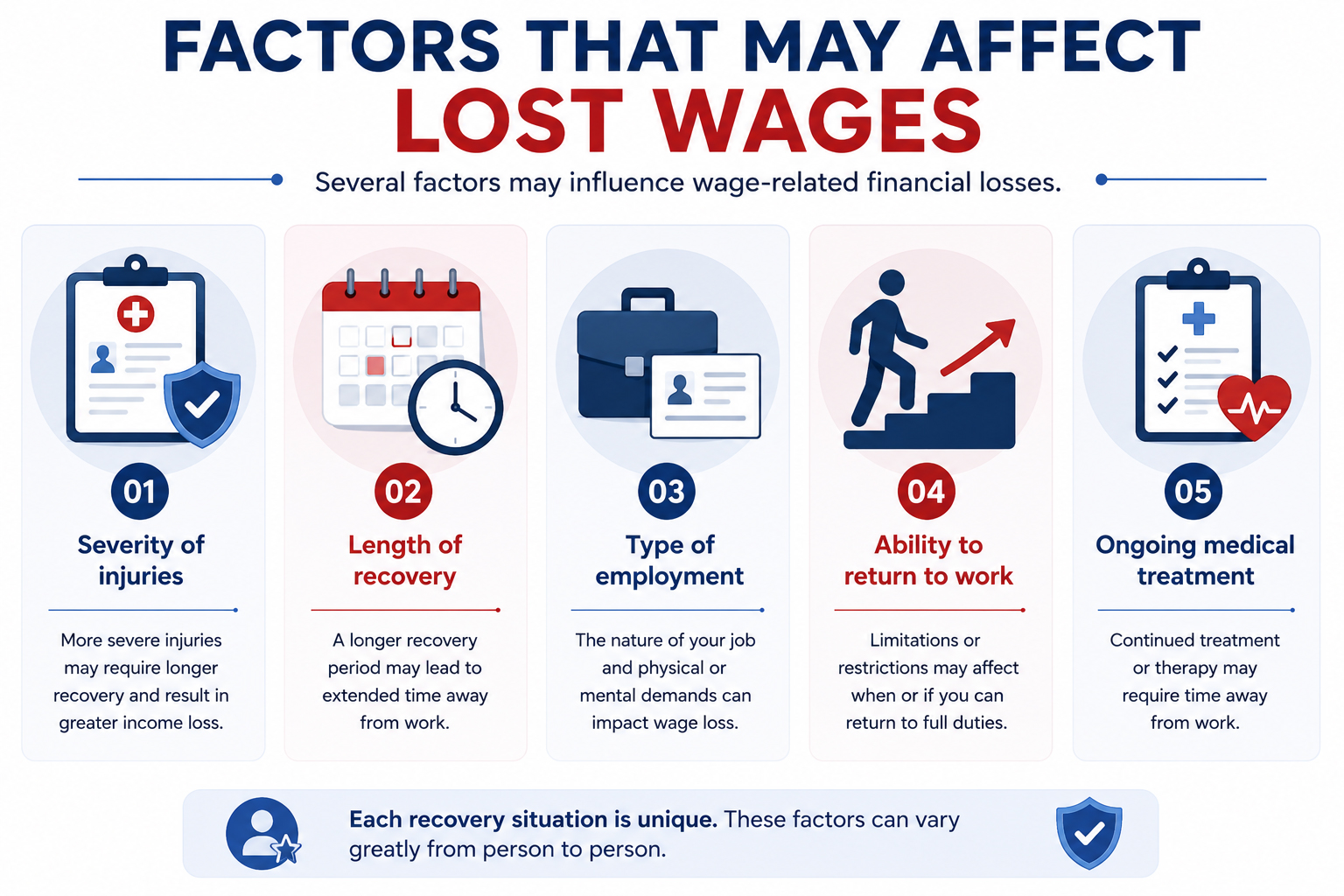
Factors That May Affect Lost Wages
Several factors may influence wage-related financial losses:
Severity of injuries
Length of recovery
Type of employment
Ability to return to work
Ongoing medical treatment
Each recovery situation is unique.
Important Documentation Related to Lost Wages
Keeping organized records may help track income-related losses.
Pay Stubs
Pay stubs may help show regular earnings, hourly wages, and income before missed work or reduced hours.
Income Statements
Income statements may provide additional details about salary, business income, or overall earnings.
Tax Documents
Tax records may help verify annual income, self-employment earnings, or long-term financial information.
Employer Communication
Emails, letters, or notices from employers may help document missed workdays, schedule changes, or work restrictions.
Work Absence Records
Attendance records or leave documentation may help track time missed from work during recovery.
Medical Notes Related to Work Restrictions
Medical notes may help explain physical limitations, recovery needs, or restrictions affecting the ability to work.
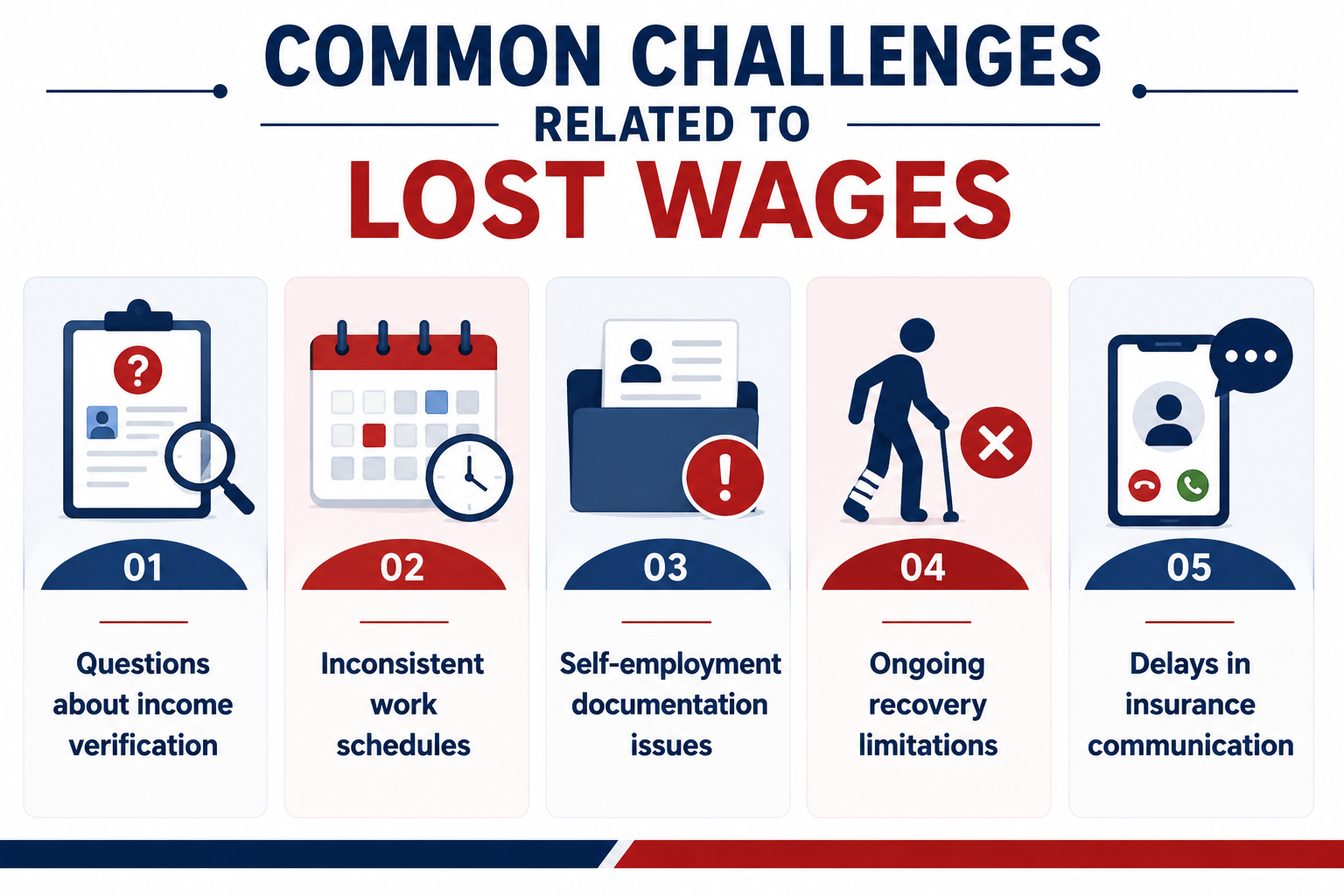
Common Challenges Related to Lost Wages
Some people may experience challenges such as:
Questions about income verification
Inconsistent work schedules
Self-employment documentation issues
Ongoing recovery limitations
Delays in insurance communication
Understanding these challenges may help reduce confusion during the process.
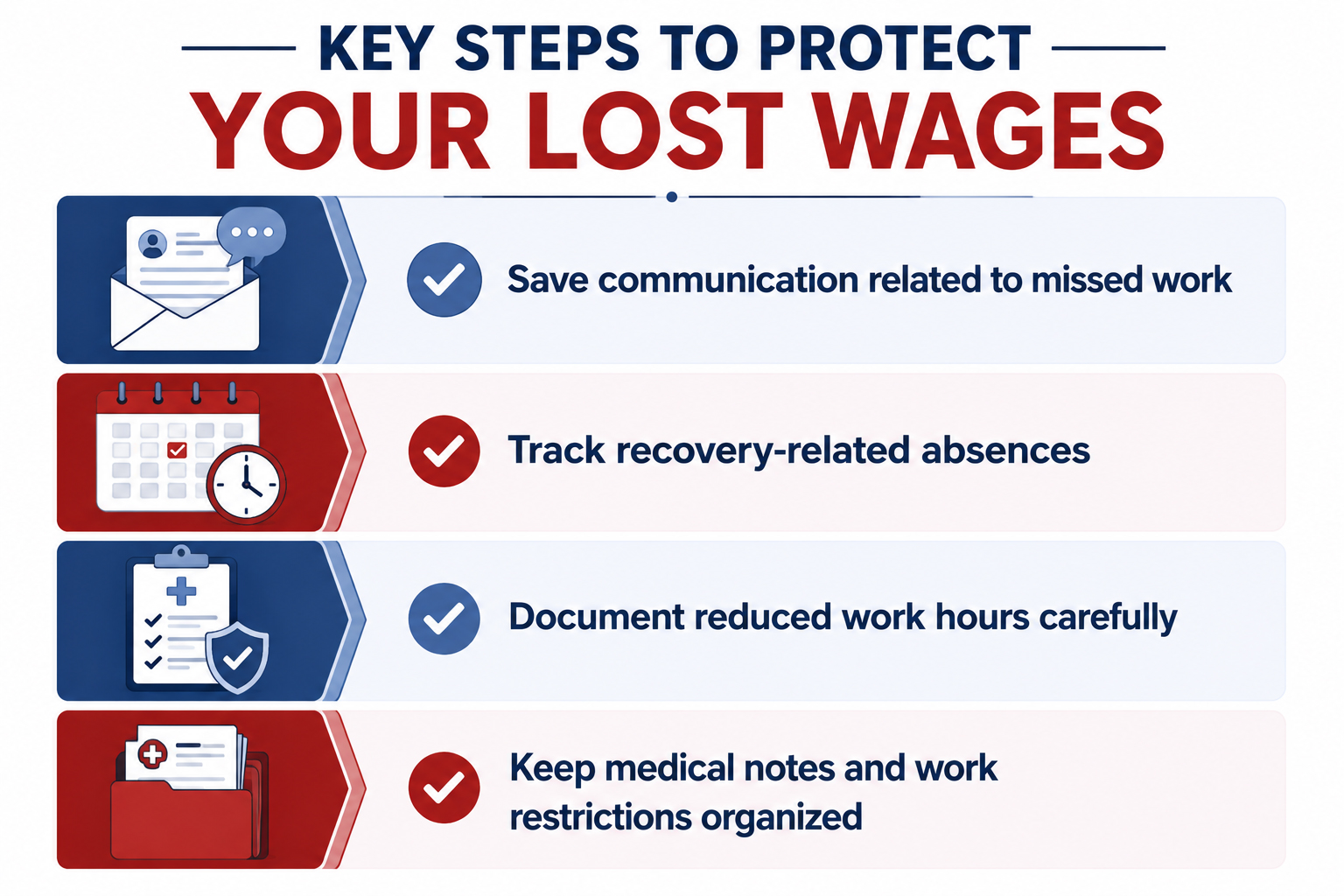
Tips to Stay Organized
Keep copies of pay records and income documents
Save communication related to missed work
Track recovery-related absences
Document reduced work hours carefully
Keep medical notes and work restrictions organized
Why Understanding Lost Wages Matters
Income loss after an injury may affect financial stability, work responsibilities, and long-term planning. Learning about lost wages may help people better understand the financial impact of recovery and treatment.