Some injuries may involve long-term healthcare needs, ongoing recovery costs, or future financial challenges. Future expenses generally refer to costs that may continue after the initial recovery period.
Understanding Future Expenses After an Injury
After an accident or injury, some people may experience ongoing medical care, rehabilitation needs, or lifestyle adjustments that continue over time. Future expenses may include healthcare costs, transportation needs, home modifications, or long-term support services.
Understanding future-related expenses may help people better prepare for long-term recovery situations.
Common Types of Future Expenses
Ongoing Medical Treatment
Some injuries may require continued medical care even after initial treatment.
This May Include
• Follow-up appointments
• Long-term medications
• Specialist care
• Future medical evaluations
Healthcare needs may continue for months or years depending on the injury.
Rehabilitation and Therapy
Recovery may involve long-term therapy or rehabilitation programs.
Rehabilitation May Include
• Physical therapy
• Occupational therapy
• Mental health support
• Recovery programs
Ongoing therapy may become part of long-term recovery.
Lifestyle and Home Adjustments
Some injuries may require changes to living spaces or daily routines.
This May Include
• Accessibility modifications
• Mobility support equipment
• Home safety adjustments
• Daily assistance needs
Lifestyle changes may vary depending on recovery needs.
Transportation and Mobility Costs
Injuries may affect transportation options or mobility-related expenses.
Transportation Costs May Include
• Medical transportation
• Mobility equipment
• Vehicle modifications
• Ongoing travel expenses
Transportation needs may increase during recovery.
Long-Term Work and Financial Impacts
Serious injuries may affect future employment or earning ability.
Financial Impacts May Include
• Reduced earning ability
• Career limitations
• Ongoing work restrictions
• Long-term financial planning needs
Every situation may involve different long-term challenges.
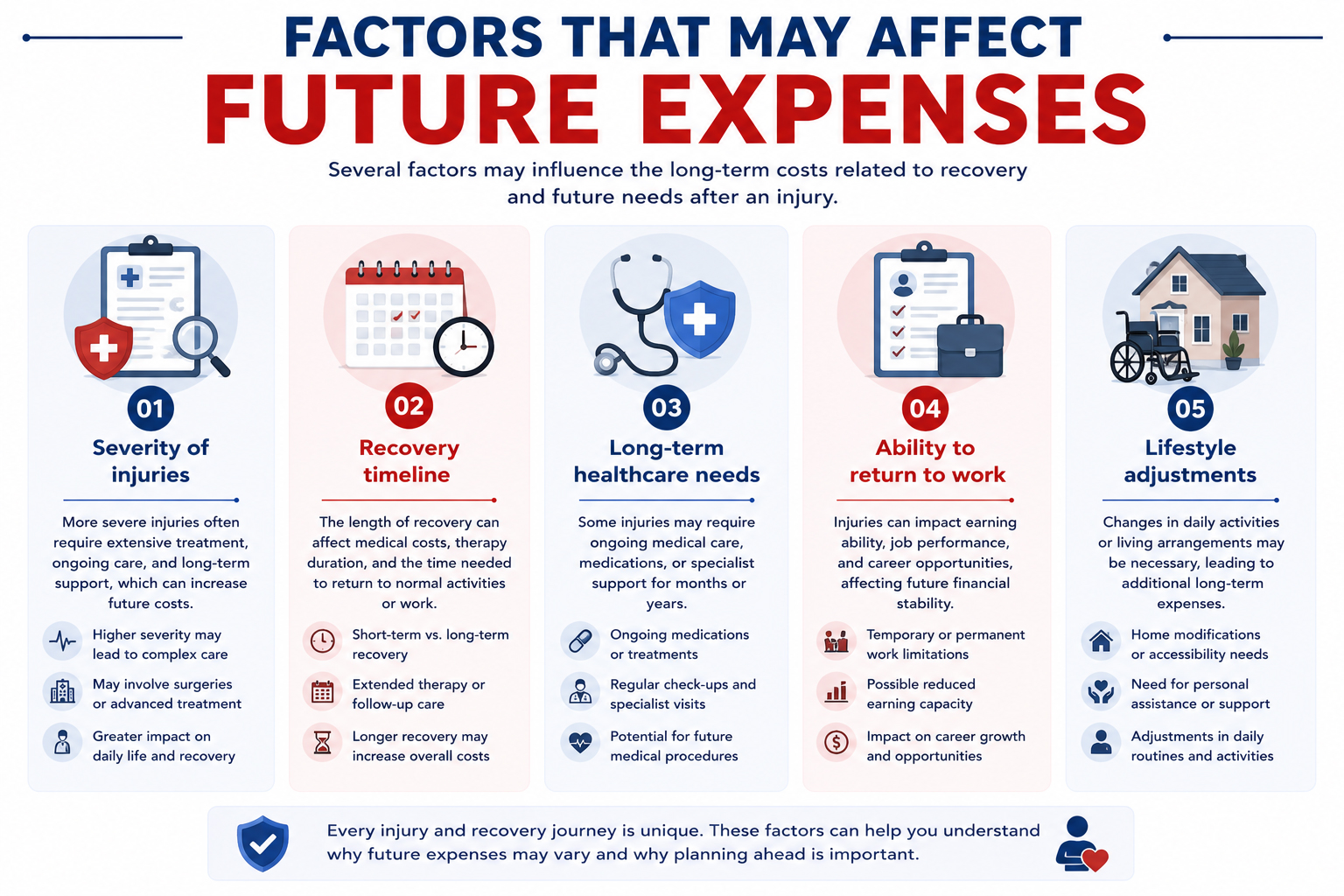
Factors That May Affect Future Expenses
Several factors may influence long-term recovery-related costs:
Severity of injuries
Recovery timeline
Long-term healthcare needs
Ability to return to work
Lifestyle adjustments
Future needs may vary from person to person.
Important Documentation Related to Future Expenses
Keeping organized records may help track long-term recovery needs and financial impacts.
Medical treatment plans
Medical treatment plans may help outline future healthcare needs, recovery goals, medications, and ongoing medical care recommendations.
Therapy Records
Therapy records may help track rehabilitation progress, treatment sessions, and long-term recovery support needs.
Prescription Documentation
Prescription records may help document medication use, treatment duration, and ongoing healthcare-related expenses.
Expense Receipts
Expense receipts may help track medical costs, transportation expenses, therapy payments, and other recovery-related spending.
Work Restriction Notes
Work restriction notes may help explain physical limitations, recovery needs, or temporary and long-term work adjustments.
Long-Term Care Estimates
Long-term care estimates may help provide information about future medical support, rehabilitation costs, or ongoing assistance needs.
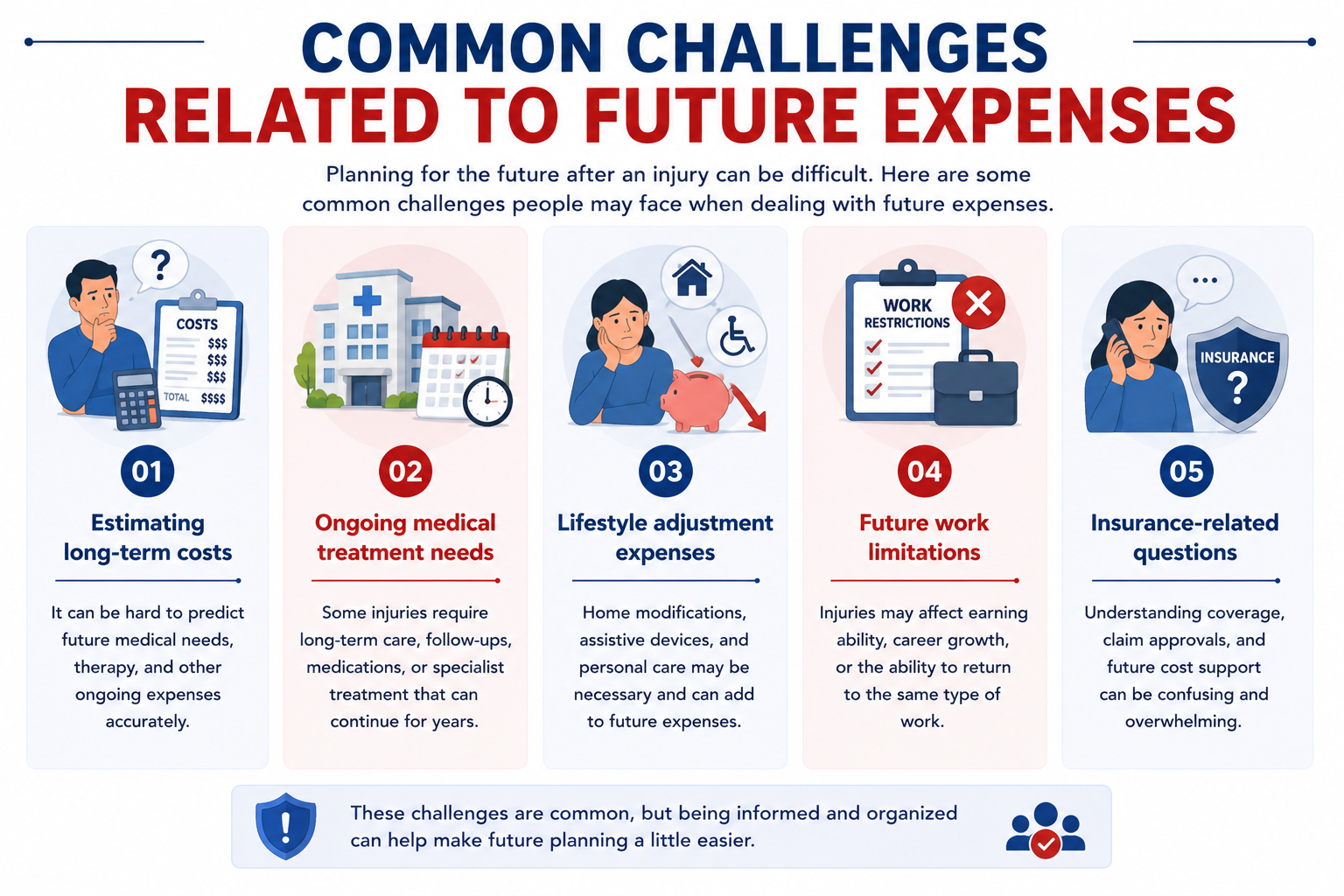
Common Challenges Related to Future Expenses
Some people may experience challenges such as:
Estimating long-term costs
Ongoing medical treatment needs
Lifestyle adjustment expenses
Future work limitations
Insurance-related questions
Understanding these challenges may help reduce confusion during recovery planning.
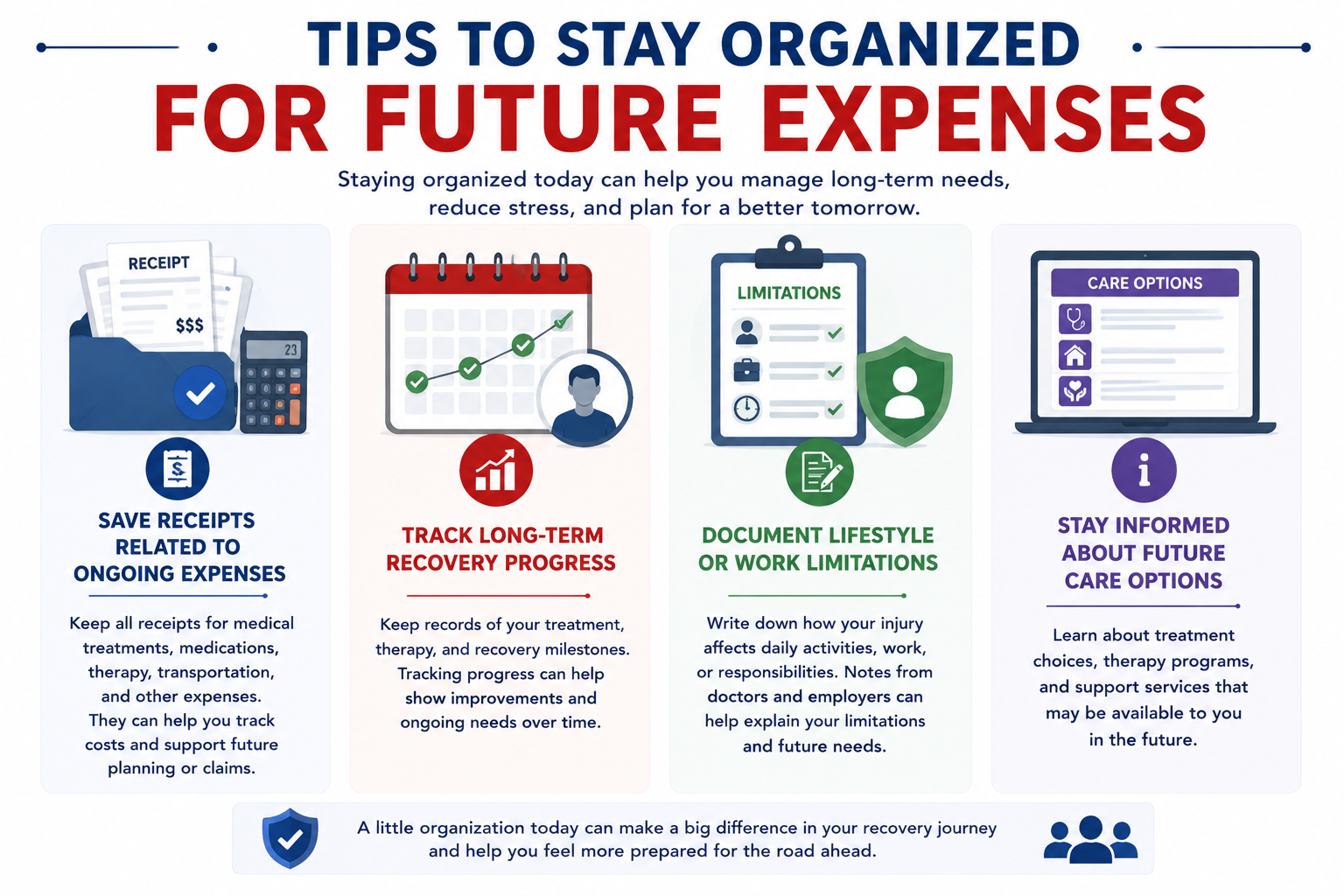
Tips to Stay Organized
Keep future treatment records organized
Save receipts related to ongoing expenses
Track long-term recovery progress
Document lifestyle or work limitations
Stay informed about future care options
Why Understanding Future Expenses Matters
Long-term recovery may involve continuing healthcare needs, financial planning, and lifestyle adjustments. Learning about future expenses may help people better understand the ongoing effects of serious injuries and recovery-related costs.