Medical expenses may include hospital visits, treatment costs, rehabilitation, medications, and other healthcare-related expenses connected to an accident or injury.
Medical Expenses After an Injury
After an accident or injury, medical treatment may involve various short-term and long-term healthcare expenses. Medical costs can sometimes continue throughout the recovery process depending on the severity of injuries and ongoing treatment needs.
Learning about common medical expenses may help people better understand the financial impact of an injury-related situation.
Common Types of Medical Expenses
Emergency Medical Care
Emergency treatment may be necessary immediately after an accident or injury.
This May Include
• Ambulance services
• Emergency room visits
• Urgent medical evaluations
• Initial treatment procedures
Prompt medical care may help document injuries and support recovery.
Hospital and Surgical Costs
Some injuries may require hospitalization or medical procedures.
Hospital Expenses May Include
• Surgery costs
• Hospital stays
• Diagnostic testing
• Specialist consultations
The cost of treatment may vary depending on the severity of injuries.
Medications and Medical Supplies
Recovery may involve medications and healthcare-related supplies.
These expenses may continue throughout treatment and recovery.
Rehabilitation and Therapy
Some injuries may require physical rehabilitation or ongoing therapy.
Rehabilitation May Include
• Physical therapy
• Occupational therapy
• Rehabilitation programs
• Follow-up treatment
Recovery timelines may vary depending on the injury.
Future Medical Expenses
Serious injuries may involve long-term healthcare needs or future medical care.
Future Expenses May Include
• Ongoing treatment
• Future surgeries
• Long-term rehabilitation
• Continuing medical support
Future medical needs may differ from case to case.
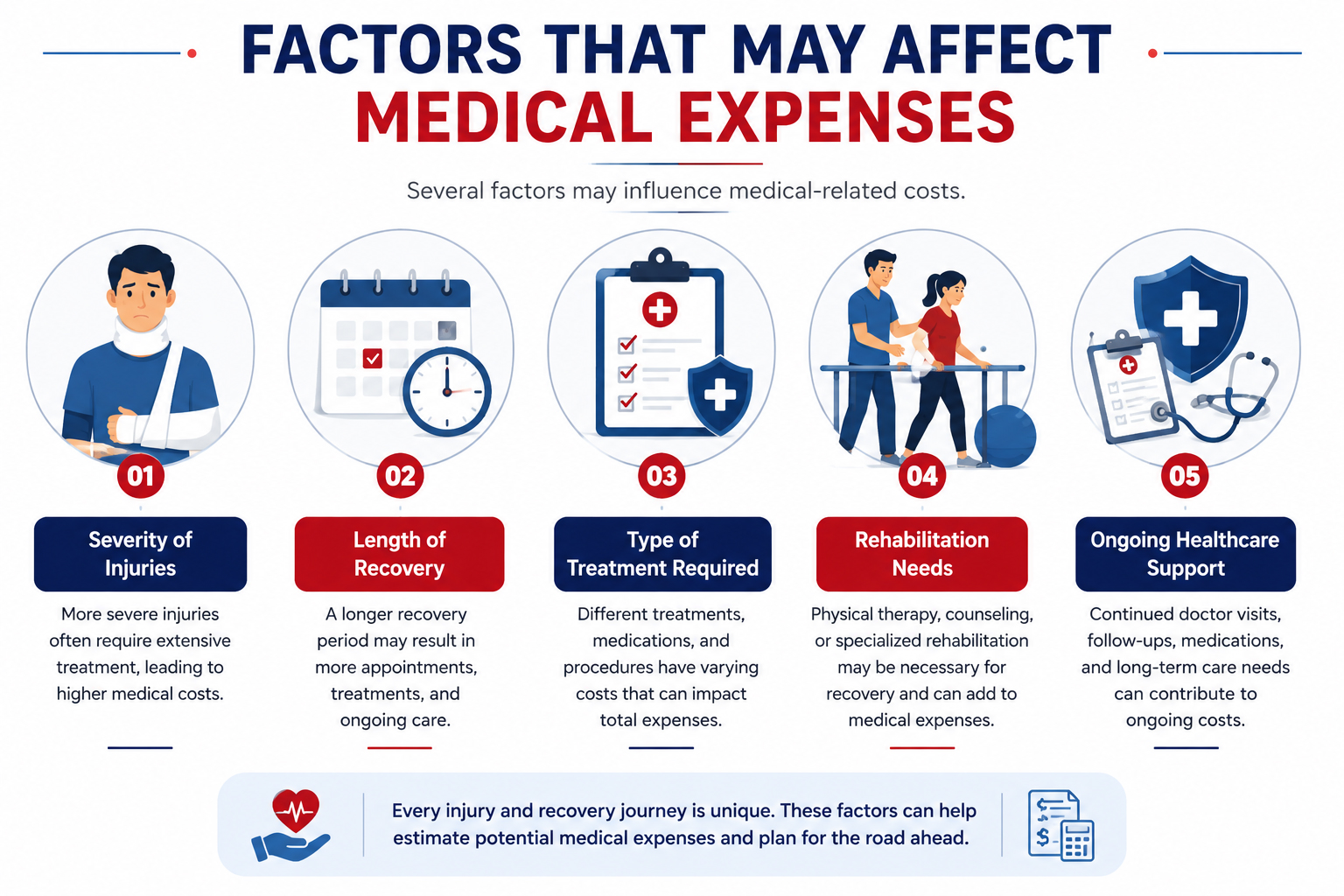
Factors That May Affect Medical Expenses
Several factors may influence medical-related costs:
Severity of injuries
Length of recovery
Type of treatment required
Rehabilitation needs
Ongoing healthcare support
Every recovery situation is unique.
Important Documentation Related to Medical Expenses
Keeping organized records may help track healthcare-related costs.
Medical Bills
Medical bills may help track hospital visits, treatment costs, emergency care, and other healthcare-related expenses.
Treatment Records
Treatment records may document medical care, recovery progress, and ongoing healthcare needs after an injury.
Prescription Receipts
Prescription receipts may help show medication-related expenses connected to treatment and recovery.
Therapy Invoices
Therapy invoices may help track rehabilitation, physical therapy, or other recovery-related services.
Hospital Discharge Papers
Discharge papers may provide important details about treatment, medical instructions, and recovery recommendations.
Insurance Communication
Insurance emails, letters, and claim-related communication may help keep important updates and records organized.
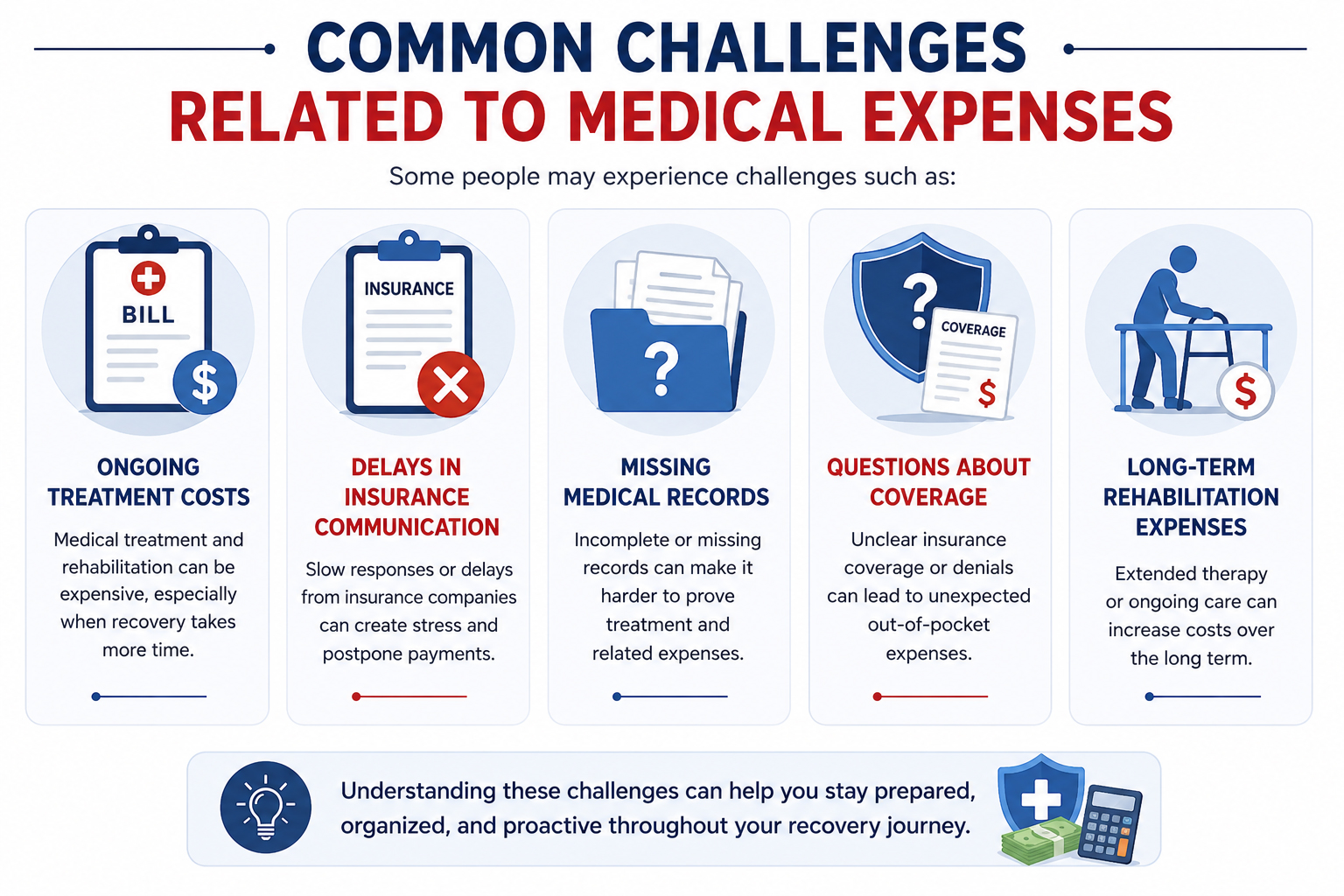
Common Challenges Related to Medical Expenses
Some people may experience challenges such as:
Ongoing treatment costs
Delays in insurance communication
Missing medical records
Questions about coverage
Long-term rehabilitation expenses
Understanding these challenges may help reduce confusion during the process.
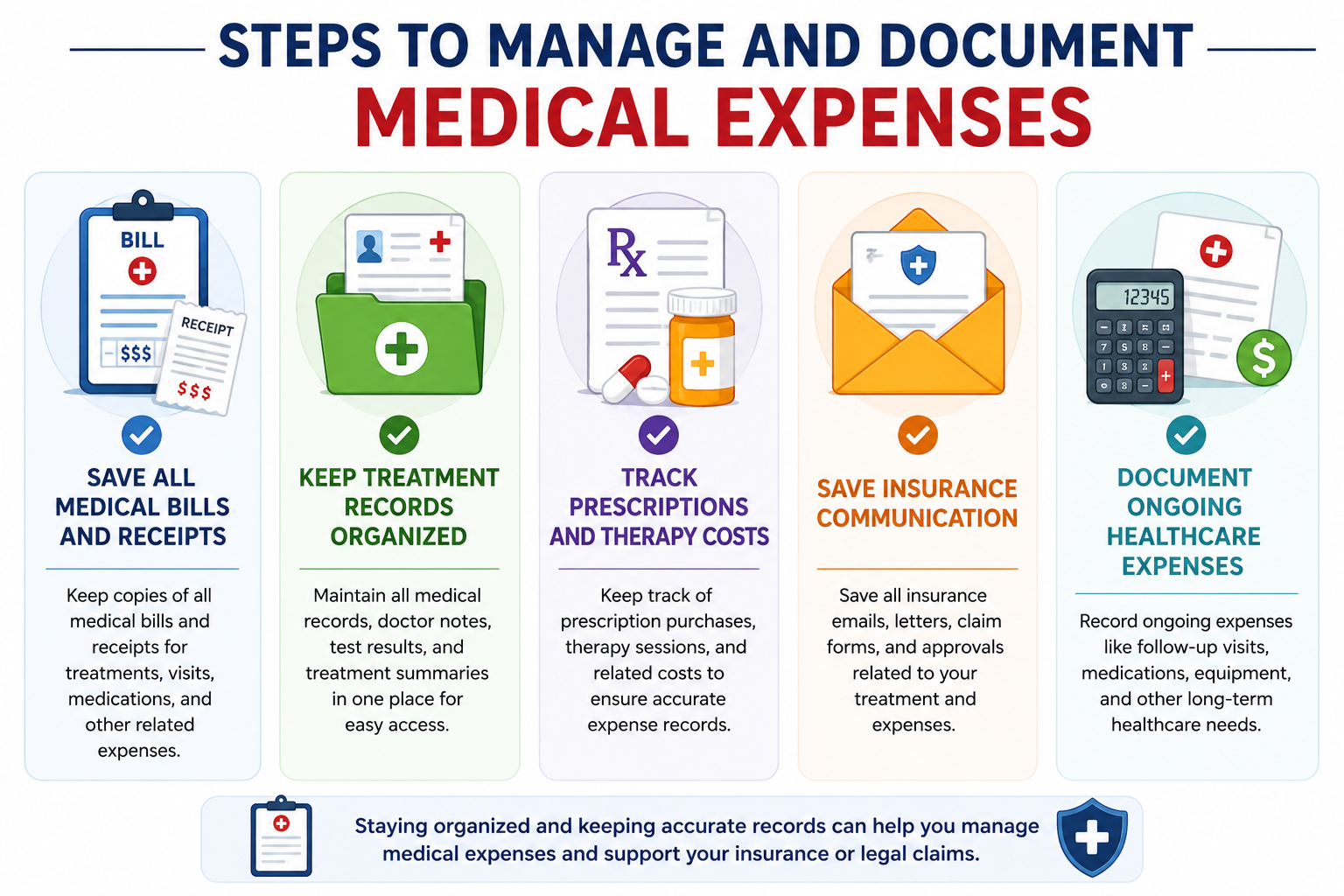
Tips to Stay Organized
Save all medical bills and receipts
Keep treatment records organized
Track prescriptions and therapy costs
Save insurance communication
Document ongoing healthcare expenses
Why Understanding Medical Expenses Matters
Medical treatment and recovery may involve multiple expenses over time. Learning about common healthcare-related costs may help people stay informed and better prepared after an accident or injury.